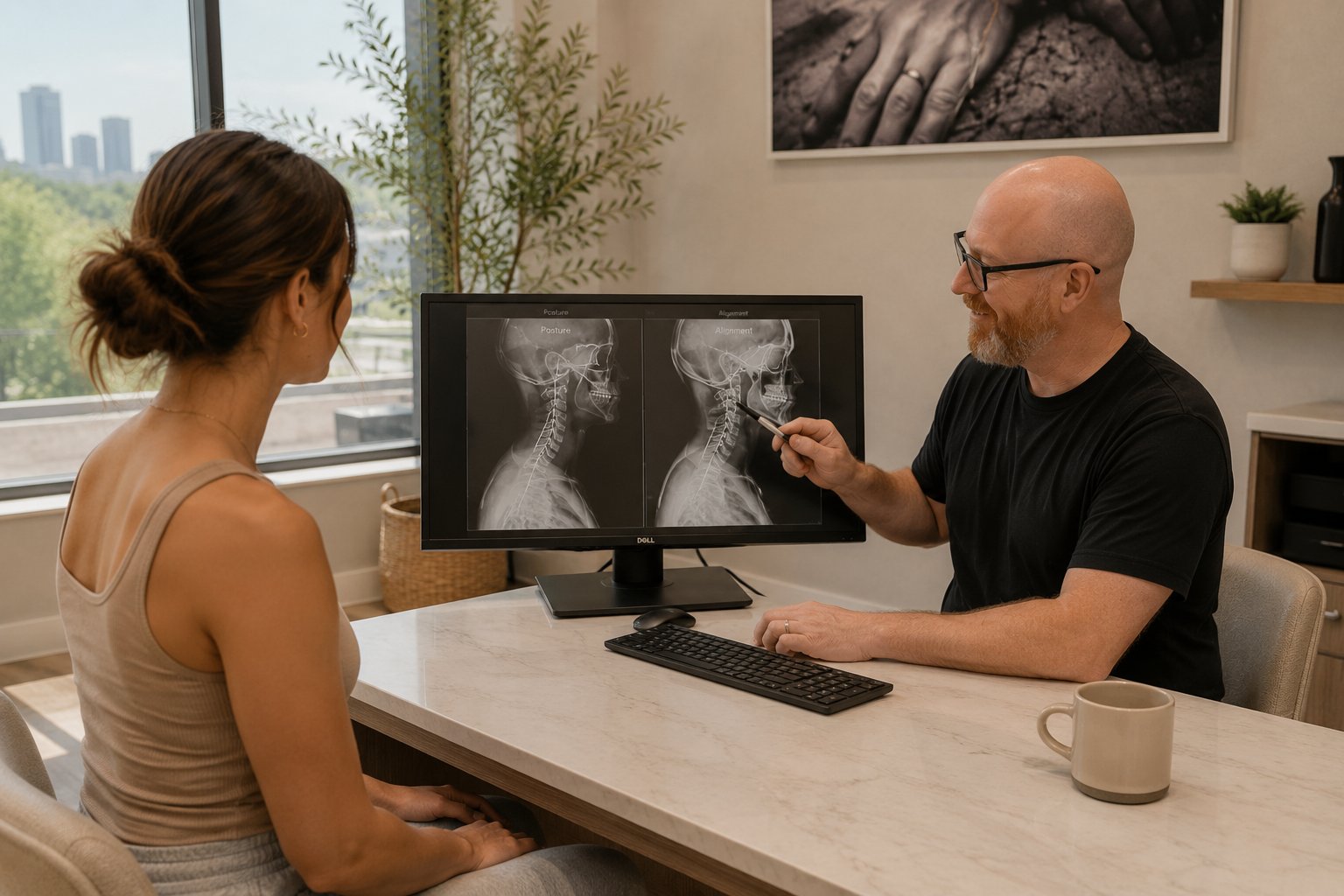
Muscular overload
As the head shifts forward, muscles around the neck, upper traps, and shoulders may work harder to support posture throughout the day.


 Book Your $49 First Experience
Clinic information, patient education, and online scheduling for 100% Chiropractic Austin Rosedale on MendAndFlow.
100% Chiropractic Austin Rosedale 3800 N Lamar Blvd, Ste 160 Austin, TX 78756 (512) 638-8544Posture & Neck Pain
An educational guide for Austin and Rosedale patients noticing posture fatigue, neck tension, headaches, upper trap tightness, or stiffness that keeps returning after desk work and screen-heavy days.
Forward head posture is not only about appearance. The goal is to understand whether posture, mobility, muscle guarding, or work habits are contributing to the pattern.

Short answer
Short answer: Forward head posture happens when the head rests forward of the shoulders, often from screen use, desk work, stress, driving, or reduced upper-back mobility.
It is not just about appearance. For some people, it can contribute to neck tension, upper trap tightness, headaches, posture fatigue, and stiffness that keeps returning.
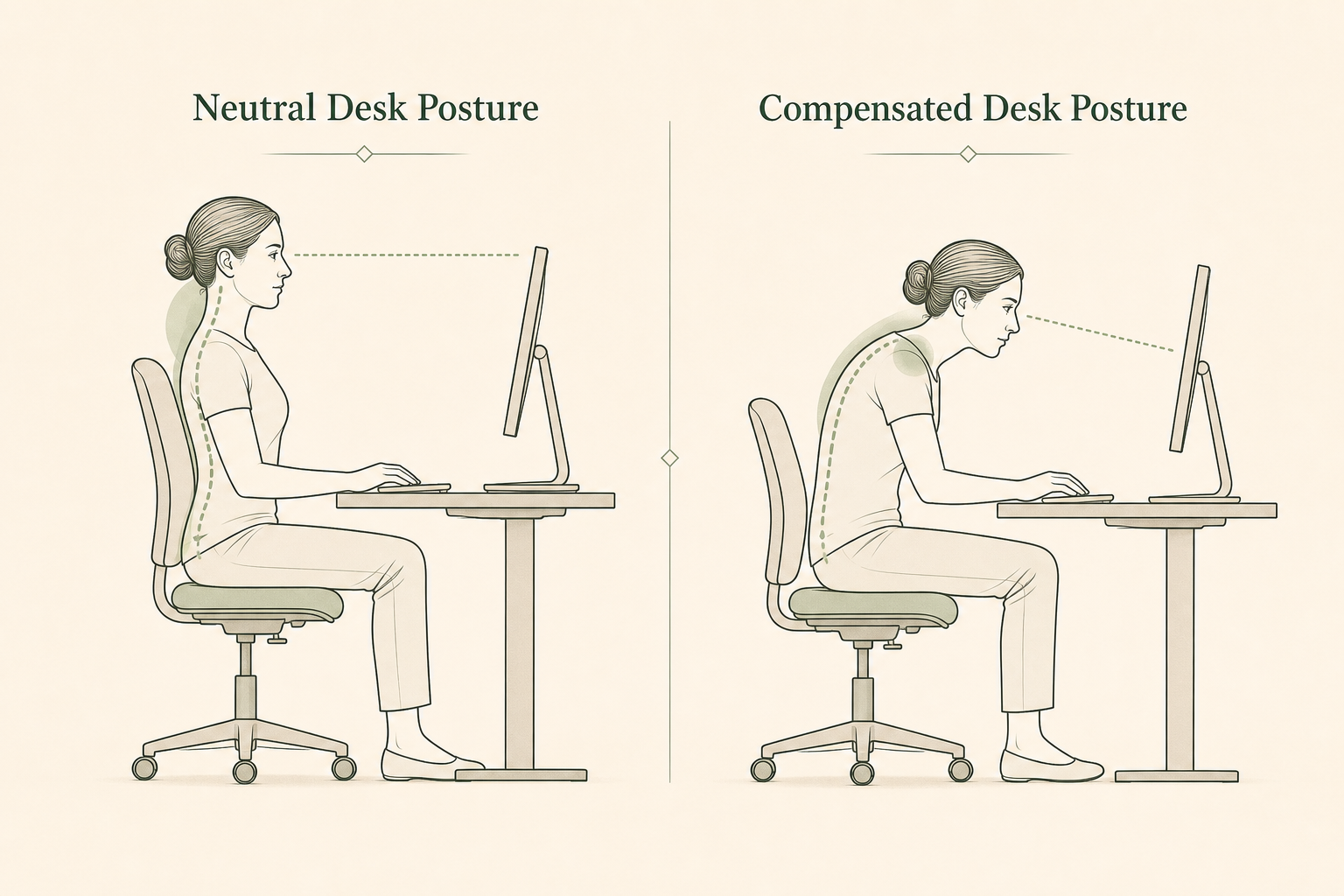
Desk posture patterns
For Austin tech workers, hybrid workers, students, and professionals in screen-heavy roles, small desk posture habits can shape how the neck, shoulders, and upper back carry load through the day.
Beyond appearance
Forward head posture is not simply a cosmetic concern. For Austin professionals, hybrid workers, parents, and active adults, it can become a daily load-management problem that affects how the neck, shoulders, and upper back move together.
As the head shifts forward, muscles around the neck, upper traps, and shoulders may work harder to support posture throughout the day.
When the upper back or neck does not move well, nearby areas often compensate, which can make tension feel like it keeps moving around.
Desk-heavy workdays and device use can make the upper back feel tired, rounded, or difficult to hold upright.
Limited rotation, stiffness, or guarded movement may become more noticeable while driving, working, exercising, or sleeping.
Neck and upper-back stress can contribute to headache patterns for some people, especially when symptoms build through the workday.
Small daily loads can add up over months or years, especially when temporary relief does not change the movement pattern underneath.
What patients often notice
Many people normalize stiffness and headaches until those patterns begin affecting focus, sleep, posture, or daily movement.
Why symptoms repeat
Many patients come to us after trying repeated short-term approaches that temporarily reduce tension but never fully explain why symptoms keep returning. Temporary relief alone often does not change the movement patterns contributing to recurring tension.
Stretching, massage, or cracking the neck may feel helpful in the moment, but the same stress pattern can return when desk posture, mobility limits, muscle guarding, and daily habits are still asking the neck to compensate.
In our clinic, we focus heavily on understanding why symptoms keep returning - not just where they hurt. Explore Our Neck Pain & Headache Evaluation.
Expert perspective
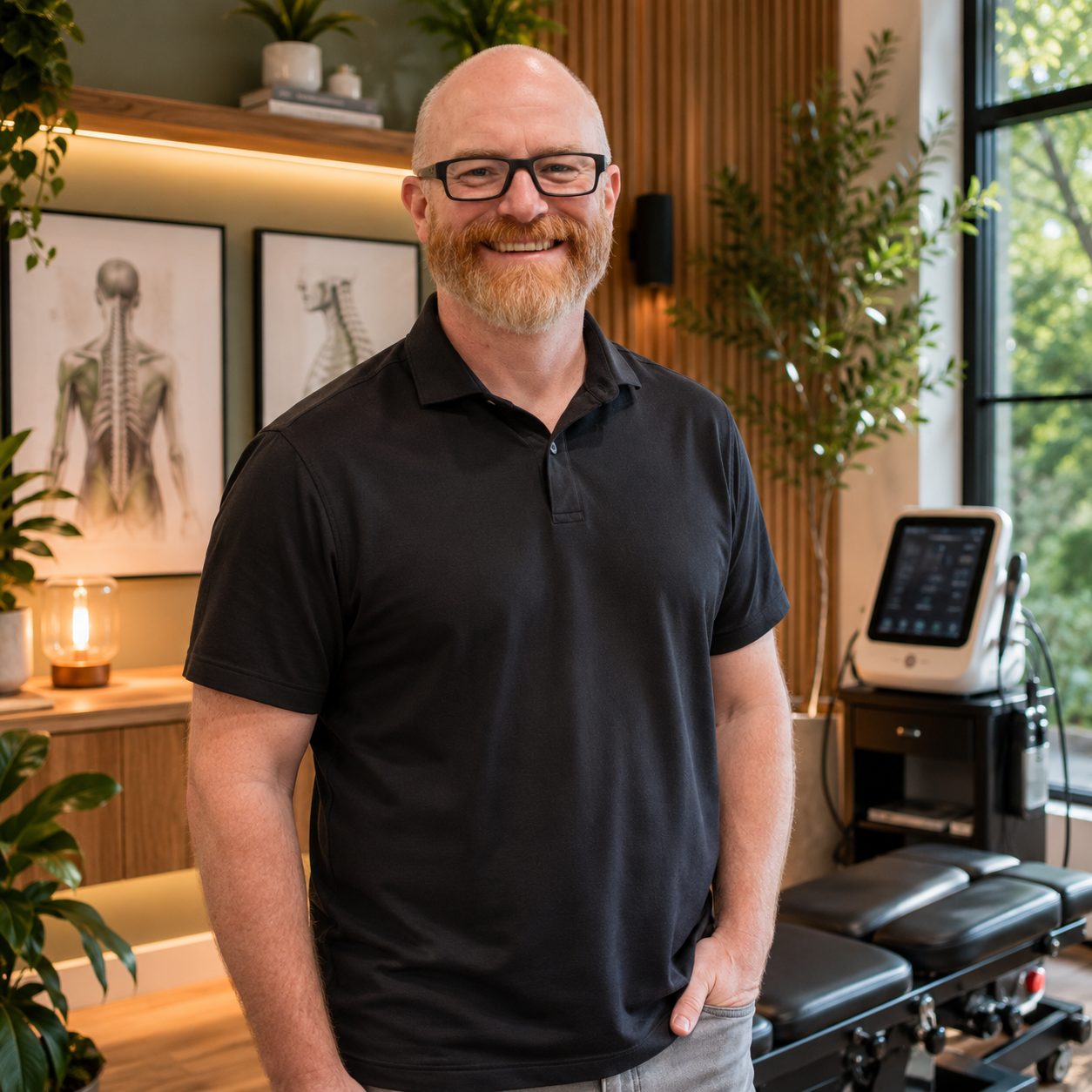
Dr. Nicolas Kellerman commonly sees posture-related neck tension patterns in Austin professionals, hybrid workers, parents, and active adults who spend long hours working at desks, driving, or looking at screens. Many patients normalize stiffness and recurring headaches until those patterns begin affecting movement quality, focus, sleep, workouts, and daily comfort.
For many people, the issue is not a single moment of pain - it is the gradual accumulation of stress, reduced movement variability, muscular guarding, and posture fatigue over time.
A clear explanation first
Dr. Nicolas Kellerman works with many Austin patients experiencing recurring posture-related tension, headaches, and neck stiffness associated with desk work, stress accumulation, and reduced movement variability.
These short videos explain how posture-related neck tension can build, why temporary relief may fade, and what we look for during a focused neck and posture evaluation.
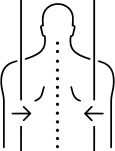
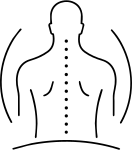
As the head shifts forward, the neck and upper shoulders often work harder to support posture and movement.
Educational posture models often estimate that forward head positioning can substantially increase muscular demand on the neck and upper shoulders. Research has also explored associations between posture, mobility, and recurring neck discomfort patterns.
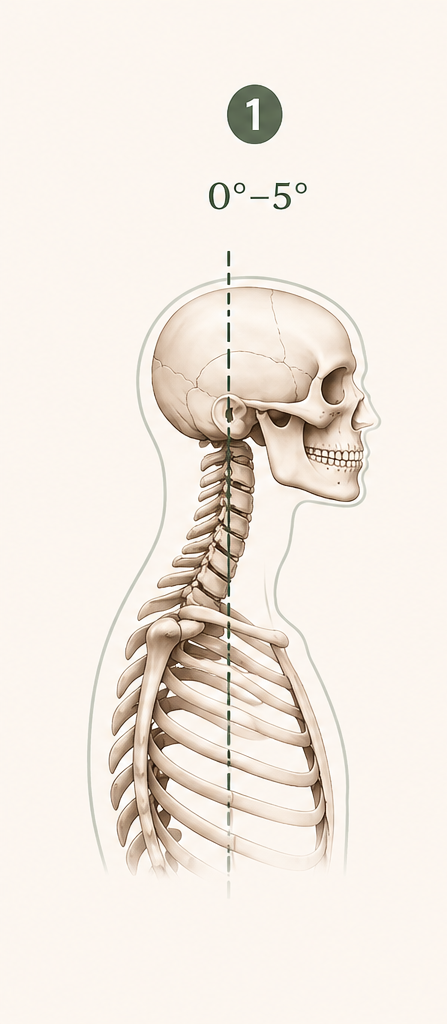
0°-5°
Head aligned over shoulders.
Baseline posture Lower demand when well supported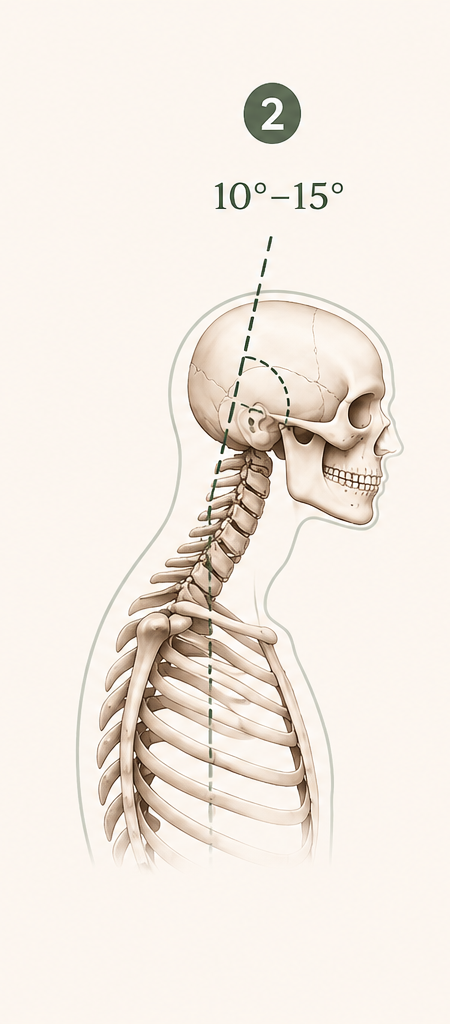
10°-15°
Head shifts forward, increasing strain on the neck and upper shoulders.
Estimated demand Increases as the head shifts forward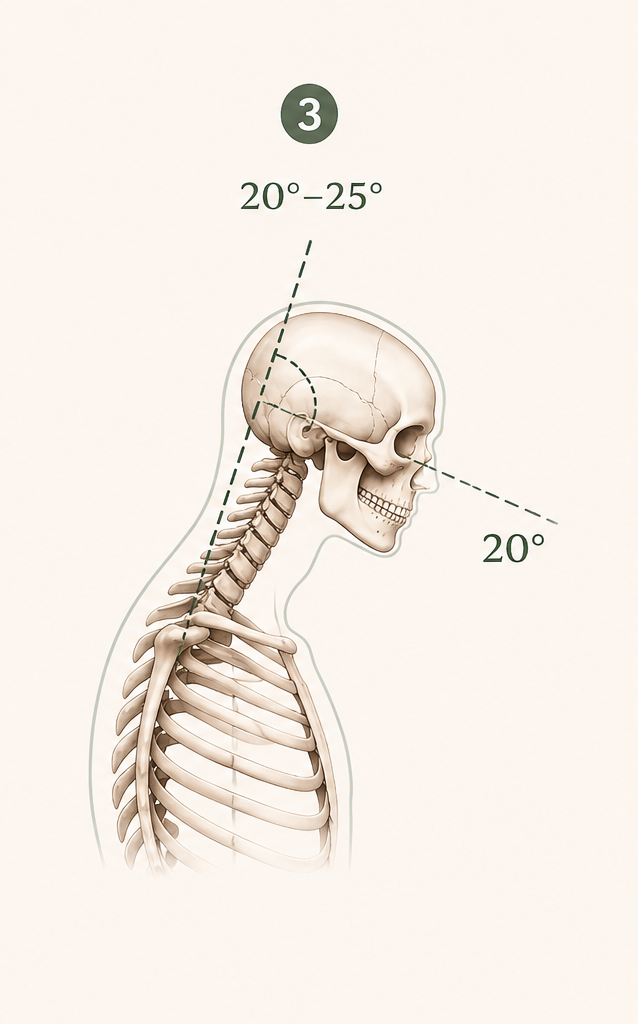
20°-25°
More significant forward shift creates greater muscular demand and postural stress.
Estimated demand Substantially higher for many people
Forward head posture can increase the workload on the muscles and joints of the neck, shoulders, and upper back over time.



Posture awareness, movement, mobility, and strength training can help reduce strain and support long-term neck and upper back health.
This information is educational and not a substitute for professional evaluation. Posture is one factor among many, and a thorough assessment can help identify your specific posture, mobility, and movement needs.
Common causes

Common effects
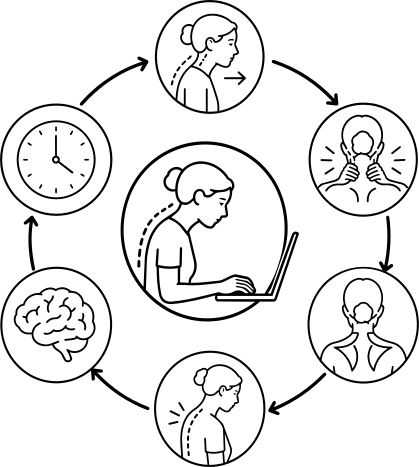
Most patients describe a repeating pattern: neck tightness, upper trap tension, headaches after work, or posture that feels hard to hold.
What people often try first
Most people do not immediately seek care for recurring posture-related tension. They usually spend months or years trying to manage the symptoms themselves.
Sometimes these approaches help temporarily. But recurring tension patterns often involve more than one contributing factor.
The bigger pattern
For many people, posture-related tension builds gradually rather than suddenly. Reduced movement variability, prolonged sitting, stress adaptation, and repeated compensation patterns can slowly make stiffness and headaches feel more frequent over time.
This does not mean posture is the only factor contributing to symptoms. But recurring movement and tension patterns can become harder to ignore when they begin affecting work focus, sleep, driving comfort, workouts, posture endurance, or energy by the end of the day.
Tension often becomes more obvious after long laptop sessions, meetings, or screen-heavy Austin workdays.
Holding an upright position may feel harder as the day goes on.
Neck and upper-back motion may feel more limited during desk work, driving, workouts, or sleep transitions.
The upper traps, shoulders, and base of the skull may feel tired from supporting repeated positions.
A practical next step
It may be worth evaluating why the tension keeps returning in the first place.
Our posture and neck evaluation is designed to look at movement patterns, mobility restrictions, posture habits, muscular compensation, and recurring stress patterns that may contribute to recurring discomfort.
What we look at
We do not only look at a side-view posture photo. We look at the movement system around it, including what your neck, upper back, shoulders, and daily habits are asking your body to tolerate. Our clinic focuses heavily on understanding recurring movement, mobility, and posture patterns rather than only providing temporary relief.
How your head, ribs, shoulders, and upper back stack when standing, sitting, and moving.
Where motion feels limited, painful, guarded, or uneven from side to side.
How the mid and upper back support your neck during posture and rotation.
Which muscles are overworking, guarding, or failing to support your posture well.

When headaches show up, where they start, and what positions make them worse.

Desk setup, phone posture, driving, sleep, stress, and workout patterns.
A more complete approach
Our approach is designed to evaluate musculoskeletal contributors to recurring posture-related tension and movement restriction. Dr. Nicolas Kellerman uses the exam findings to connect posture, mobility, movement quality, and daily habits instead of relying on a one-size-fits-all plan. Learn More About Our Corrective Care Approach.
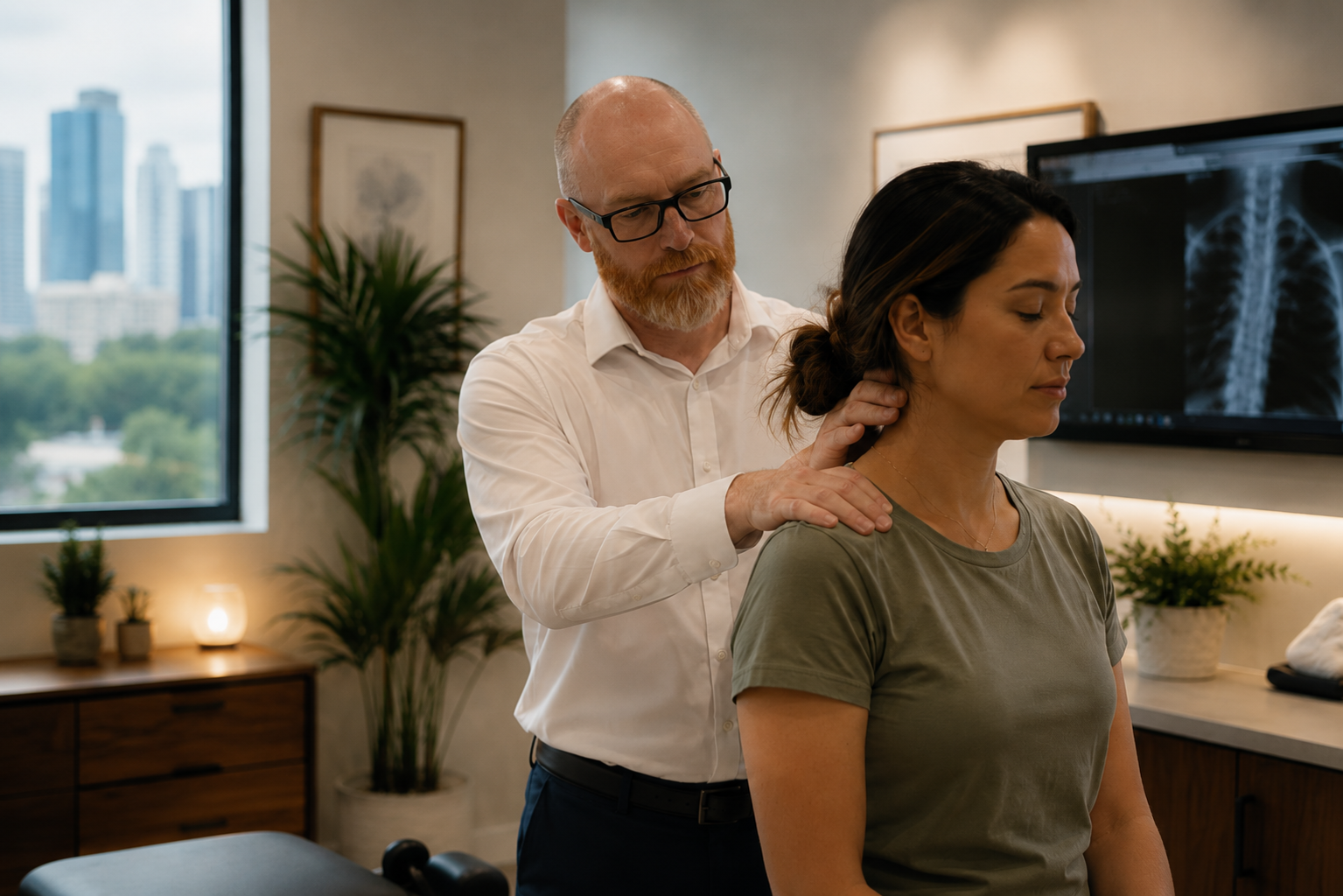
Chiropractic care supports neck, upper back, and spinal mobility so patients can move comfortably again.
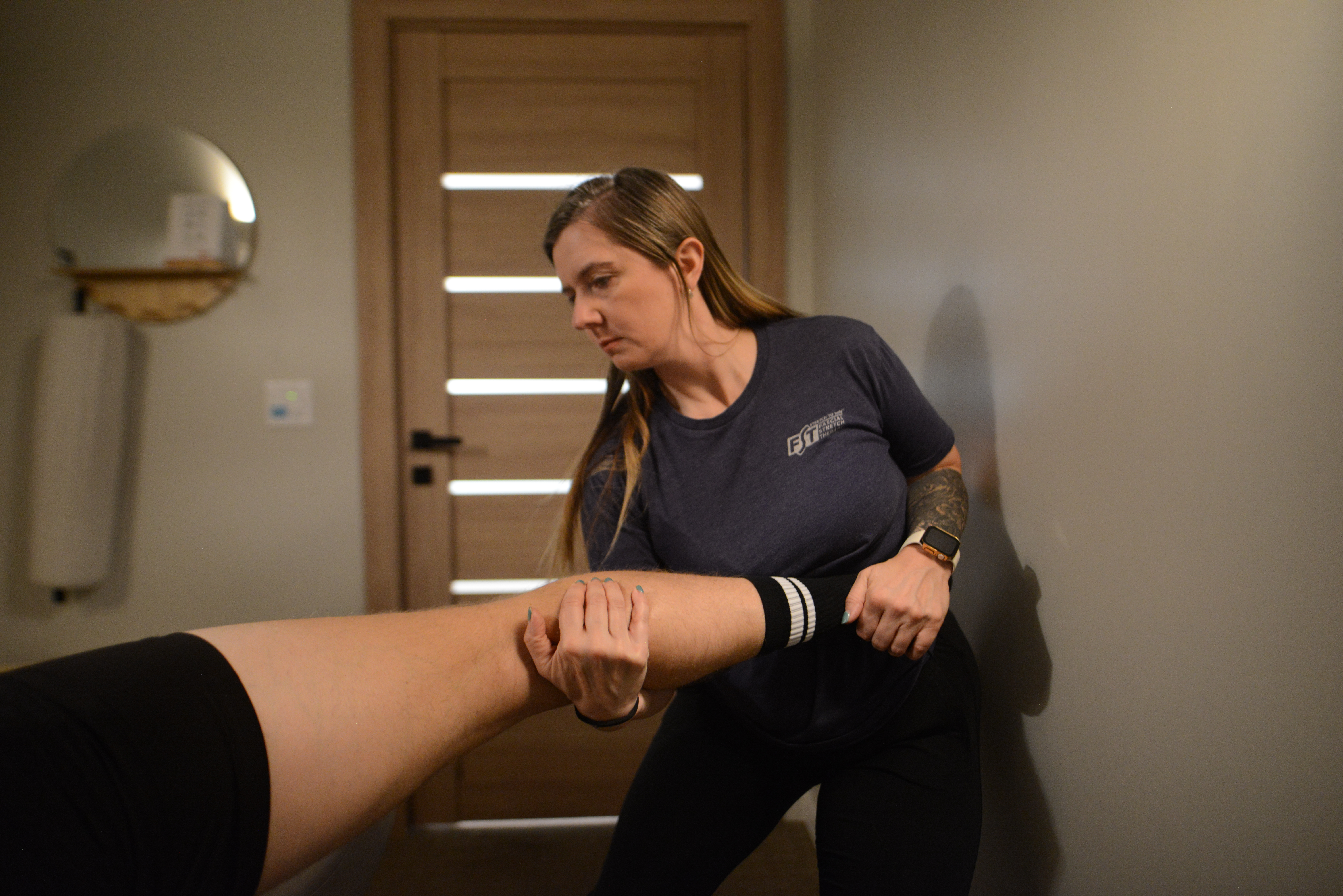
Fascia stretch therapy and soft tissue work help address tight compensation patterns.
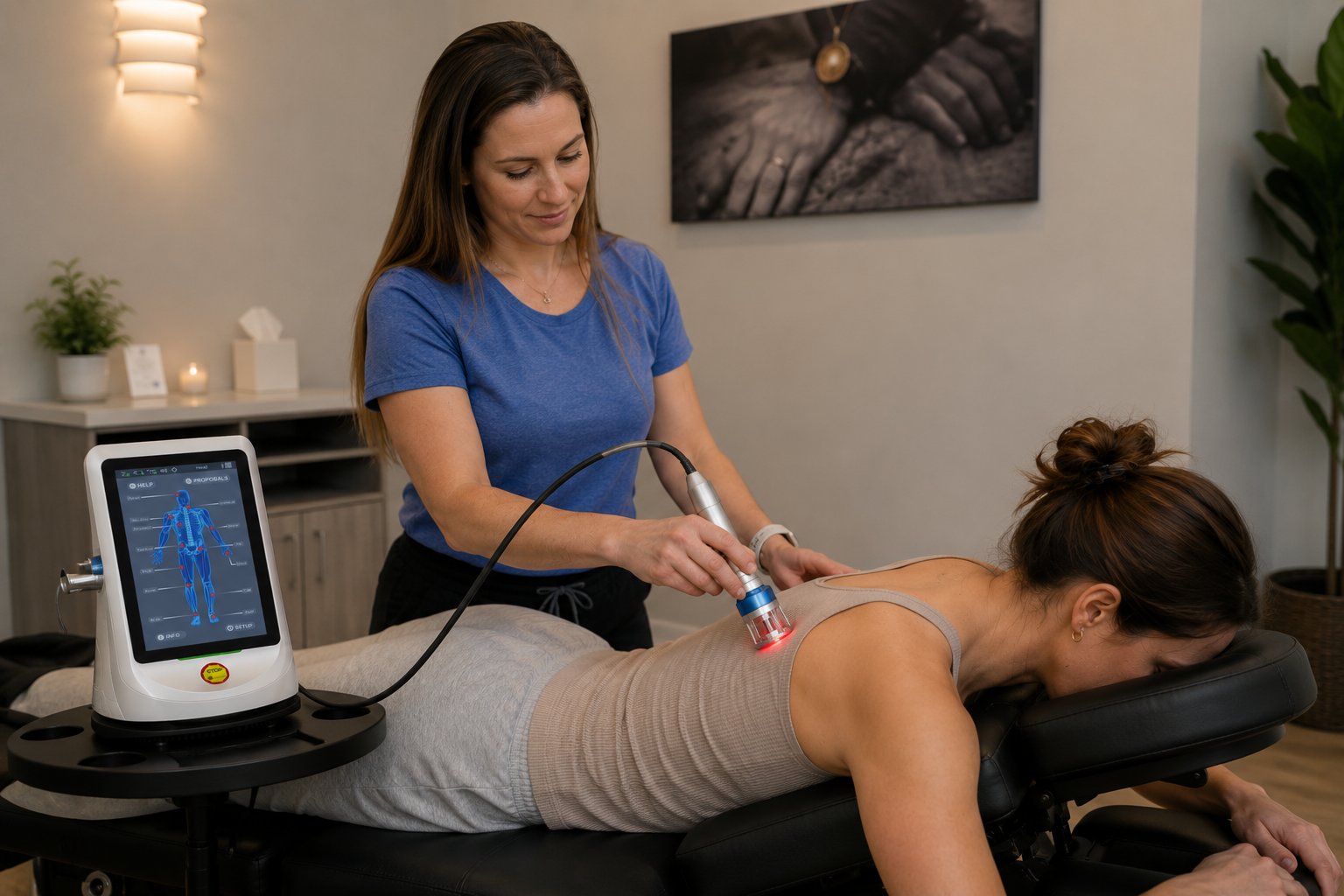
Class IV laser therapy may support irritated soft tissue when clinically appropriate.
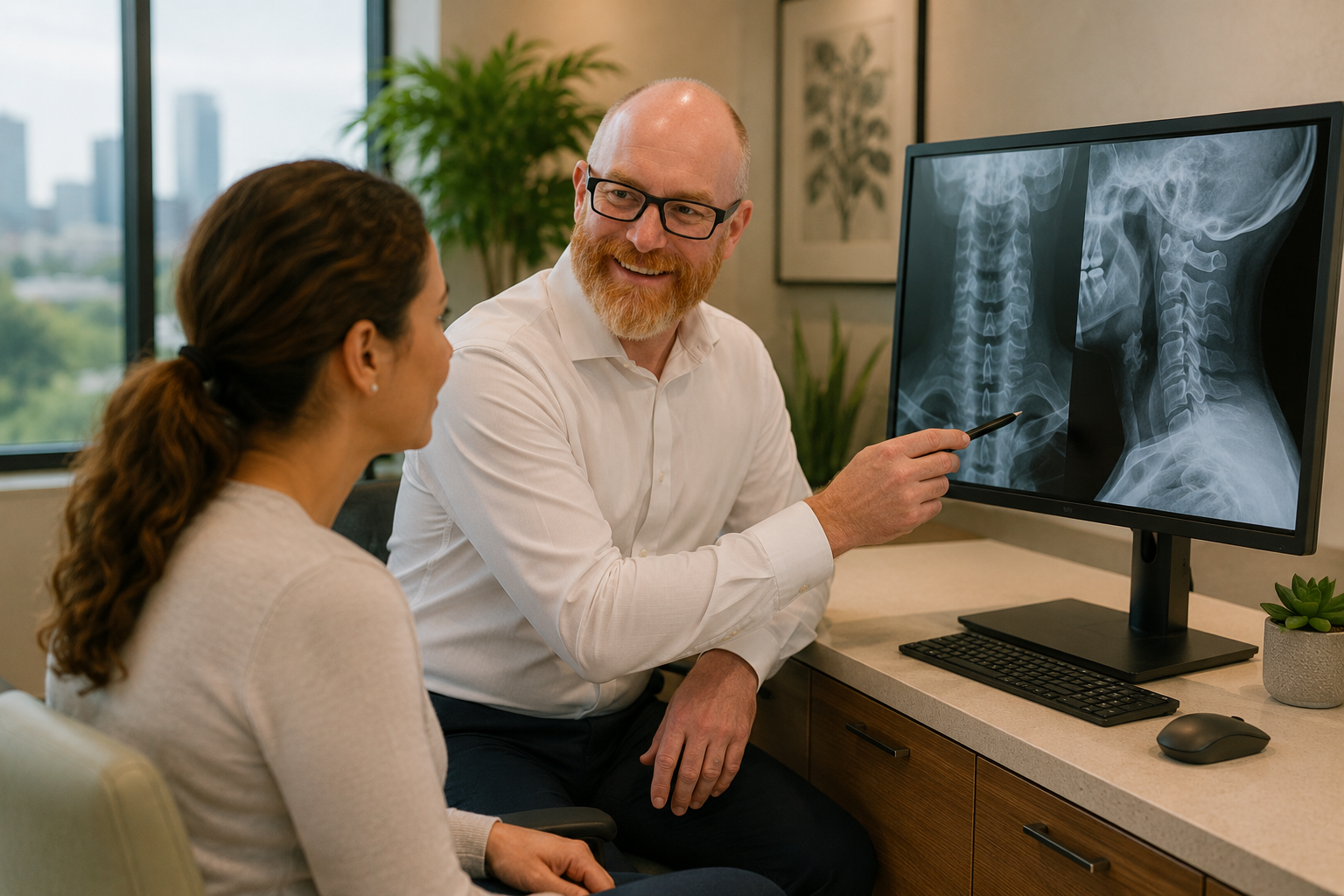
In-house X-rays may be used when your exam indicates imaging is appropriate.
Forward head posture can increase stress on the neck, upper back, and muscles near the base of the skull. For some people, those musculoskeletal patterns may contribute to recurring tension headaches, stiffness, and neck discomfort.
Common contributors include long hours at a desk, phone and screen use, reduced upper back mobility, muscle guarding, stress patterns, and movement habits that gradually pull the head forward.
No. While posture affects how you look, it can also affect how your neck, shoulders, and upper back manage load throughout the day.
Our evaluation looks at posture, neck and upper back mobility, muscle compensation, headache patterns, daily work habits, and whether imaging is clinically appropriate.
Many patients can improve how their body moves and holds posture with the right combination of mobility work, soft tissue care, postural training, and daily habit changes. Results vary by person and exam findings.
If your neck tension, headaches, shoulder tightness, or posture strain keep returning, an evaluation can help identify whether movement restrictions or compensation patterns are contributing.
For some people, recurring neck tension, reduced mobility, upper trap tightness, and posture fatigue may begin affecting workouts, recovery, overhead movement, lifting comfort, or general movement confidence over time.
Summary: Research has explored associations between forward head posture and neck pain in adults.
A systematic review and meta-analysis found an association while also noting that posture is one factor among many. View PubMed Central reference.
Summary: Musculoskeletal research has examined screen positioning and recurring neck or upper-shoulder strain.
Reviews discuss screen use, workstation demands, and postural load as possible contributors for some individuals. View PubMed Central reference.
Summary: Research has examined relationships between certain headache patterns and cervical musculoskeletal findings.
Systematic reviews discuss cervicogenic headache symptoms and impairments in the cervical region. View PubMed Central reference.
Summary: Reviews have examined mobility, exercise, and manual-therapy approaches for forward head posture and neck-pain patterns.
Findings vary by patient presentation and study quality, which is why evaluation matters. View PubMed Central reference.
Local clinic note
100% Chiropractic Austin Rosedale sees patients from Rosedale, Hyde Park, Allandale, Brentwood, North Loop, UT Austin, and nearby Central Austin neighborhoods who are navigating desk-heavy workdays, hybrid work, commuting, active lifestyles, and recurring neck tension patterns.
Location: 3800 N Lamar Blvd, Ste 160, Austin, TX 78756. Get directions.

Many people adapt around recurring stiffness and headaches for years before realizing how much those patterns are affecting focus, movement quality, workouts, sleep, posture endurance, and daily comfort.
A more complete posture and movement evaluation may help identify the habits, mobility restrictions, and compensation patterns contributing to recurring tension.
Last updated June 14, 2026
MendAndFlow is a healthcare-provider directory and patient-education platform owned and operated by Quake Brands LLC.
This clinic profile and its related educational and online-scheduling pages feature 100% Chiropractic Austin Rosedale.
Clinical services are provided by 100 Chiro Corona LLC d/b/a 100% Chiropractic Austin Rosedale, an independently owned and operated 100% Chiropractic franchise.
Appointment requests made through these pages are for the Austin Rosedale clinic. MendAndFlow does not provide clinical care and is not the corporate 100% Chiropractic website.
100% Chiropractic Austin Rosedale