Soft Tissue Irritation
Laser therapy may support irritated soft tissue when clinically appropriate.


 Book Your $49 First Experience
Clinic information, patient education, and online scheduling for 100% Chiropractic Austin Rosedale on MendAndFlow.
100% Chiropractic Austin Rosedale 3800 N Lamar Blvd, Ste 160 Austin, TX 78756 (512) 638-8544Class IV laser therapy in Austin, TX
Evaluation-first Class IV laser therapy for recurring pain, soft tissue irritation, stiffness, and movement-related discomfort.
At 100% Chiropractic Austin Rosedale, laser therapy is not treated as a standalone gimmick. It is considered within a movement-focused evaluation that looks at posture, mobility, muscle guarding, irritated tissue, and daily stress patterns before recommending care.
Our Central Austin and Rosedale clinic often has same-day and same-week appointments available.
Same-day and same-week appointments are often available.
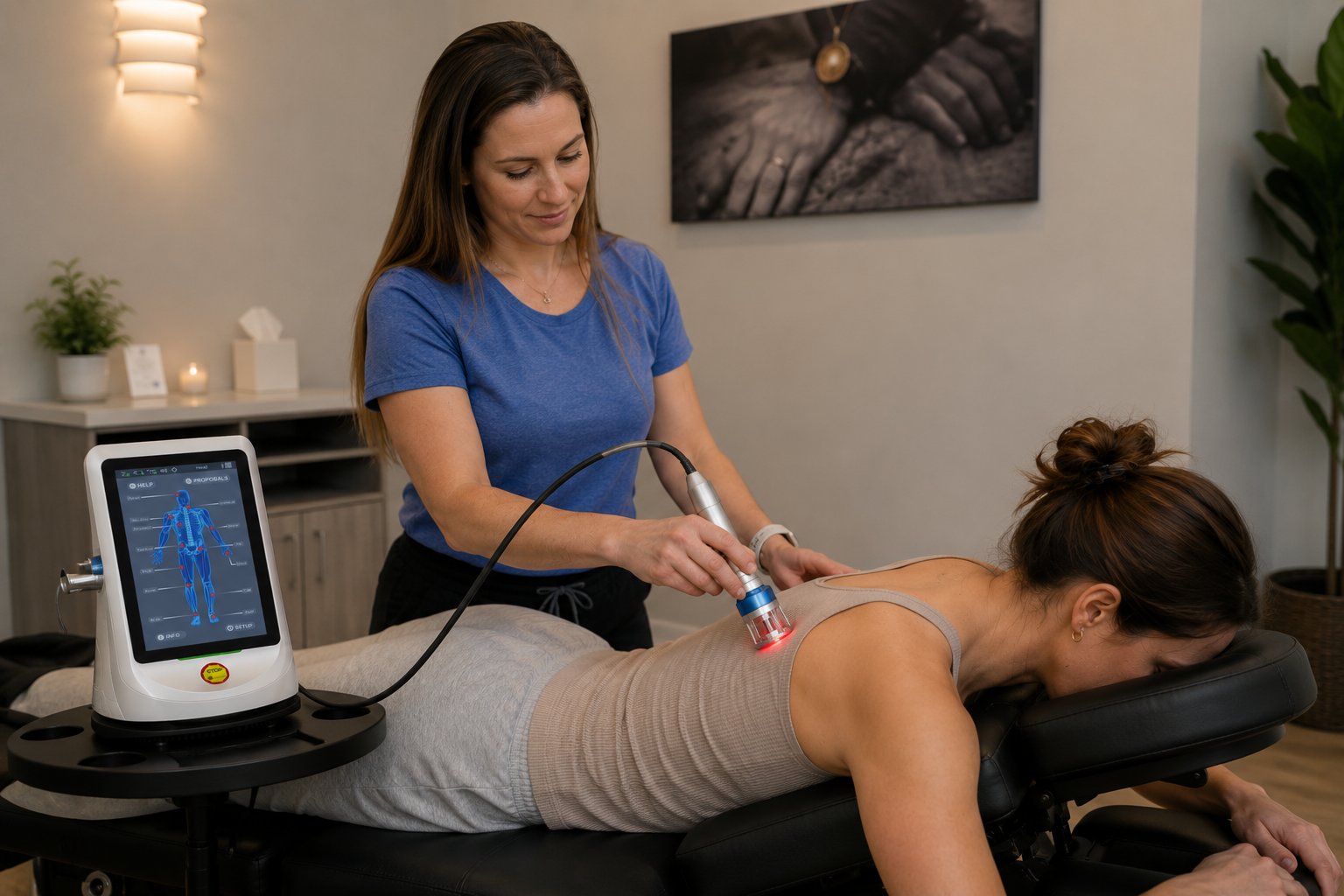
Why this may help
Pain, stiffness, and recurring irritation can involve more than one factor: joint motion, soft tissue tension, inflammation, muscle guarding, posture, movement habits, and daily stress patterns.
Class IV laser therapy may be considered when the evaluation suggests that irritated tissue, soft tissue sensitivity, or inflammation-related discomfort may be part of the pattern.
Laser therapy may support irritated soft tissue when clinically appropriate.

Care may also need to address the guarding pattern around the irritated area.
Mobility, posture, and daily movement habits often shape how symptoms return.
Laser therapy is most useful when it fits the evaluation, the tissue findings, and the broader corrective-care plan.
How it works
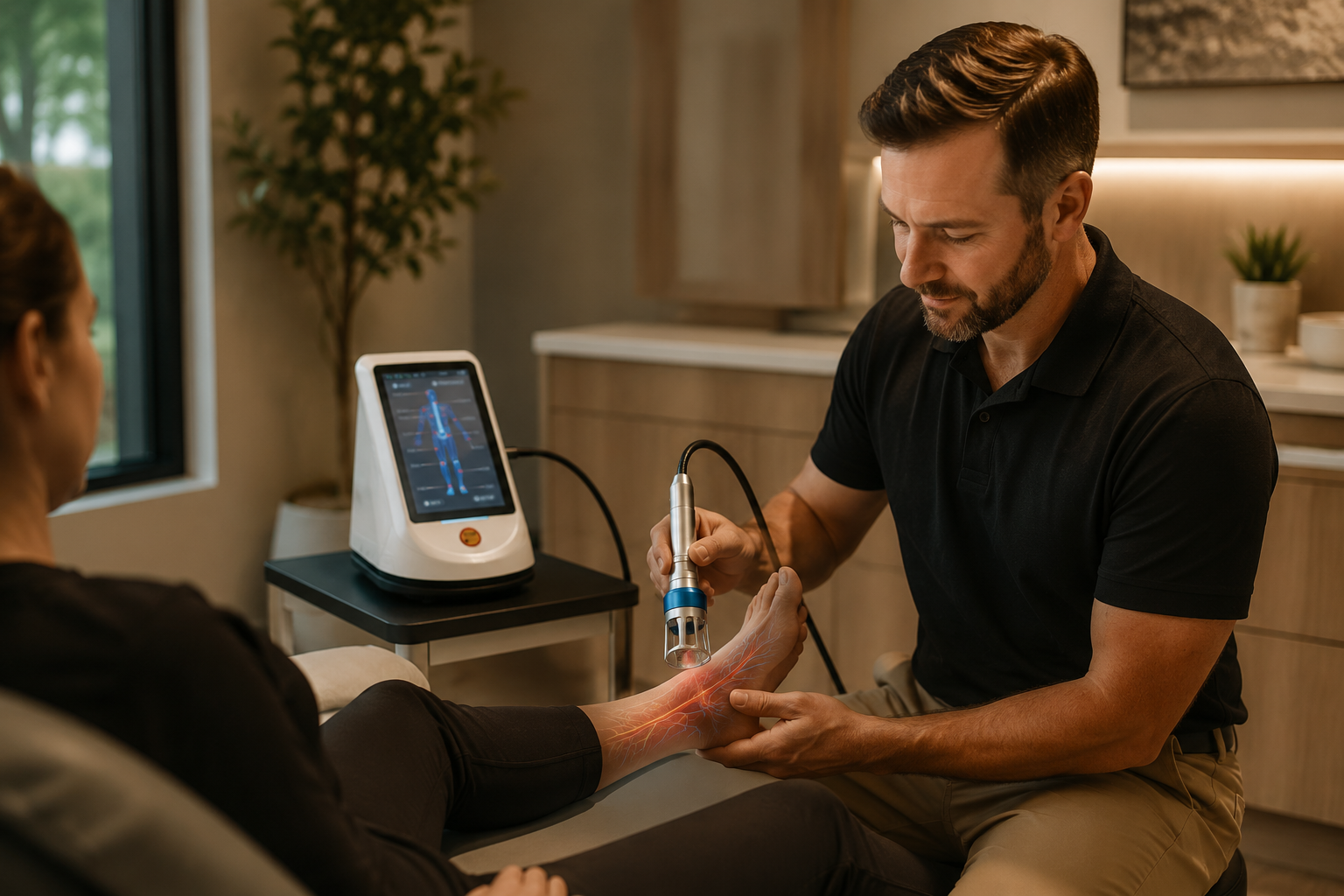
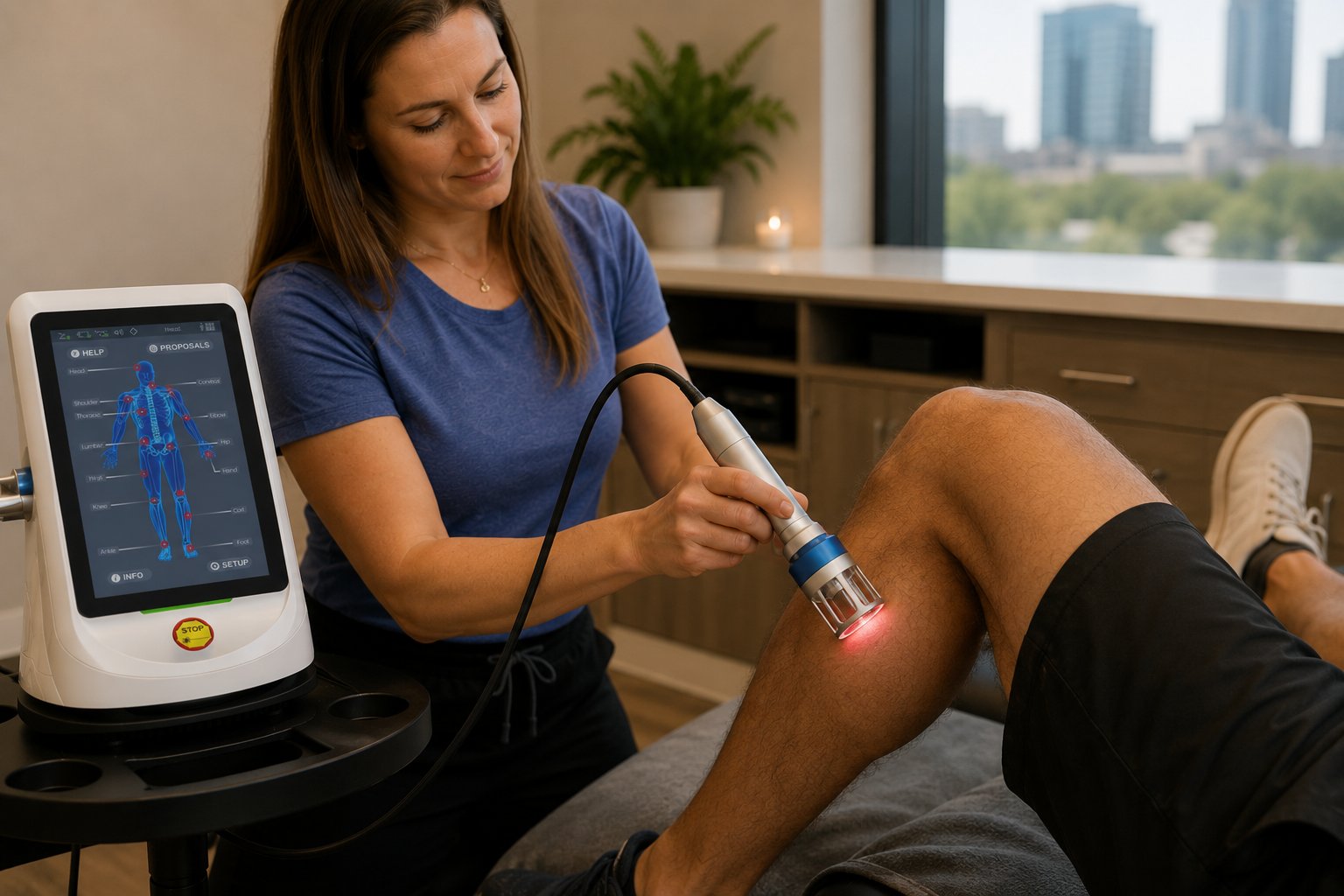
Class IV laser therapy applies therapeutic light energy to targeted tissue. The goal is to support the body's normal tissue-response processes, reduce sensitivity where appropriate, and help irritated areas tolerate movement better as part of a broader care plan.
Research often describes this as photobiomodulation: light interacting with cells in ways that may support cellular activity, circulation-related processes, and inflammatory modulation. In the clinic, the important question is whether laser fits your exam findings, tissue sensitivity, symptoms, and goals.
Light is applied to a specific treatment area, not the whole body.
Laser may support irritated soft tissue and inflammation-related discomfort when appropriate.
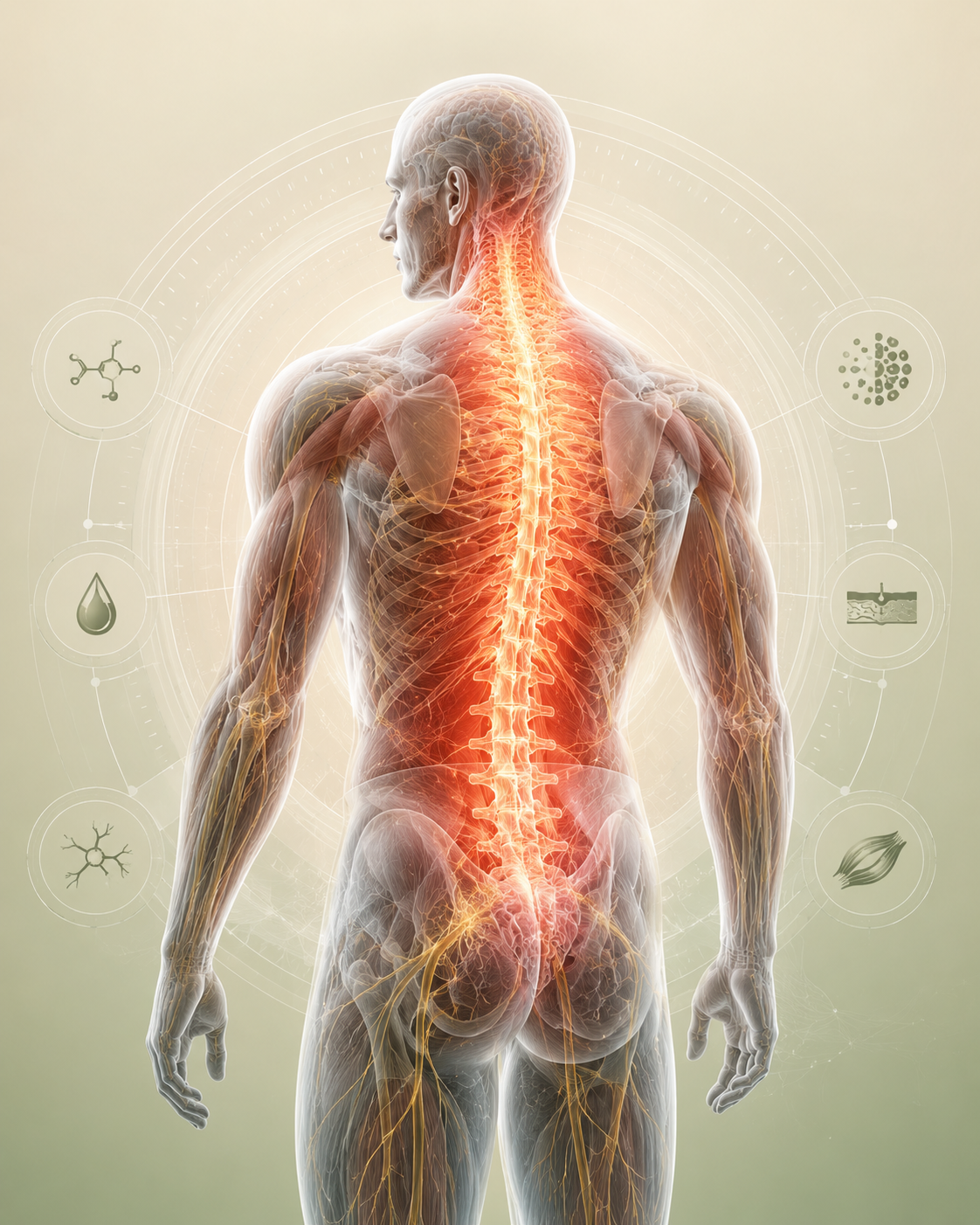
The goal is often to help the area tolerate movement, loading, and rehab better.
Laser is considered alongside chiropractic care, soft tissue therapy, stretch therapy, and corrective movement.
Class IV compared carefully
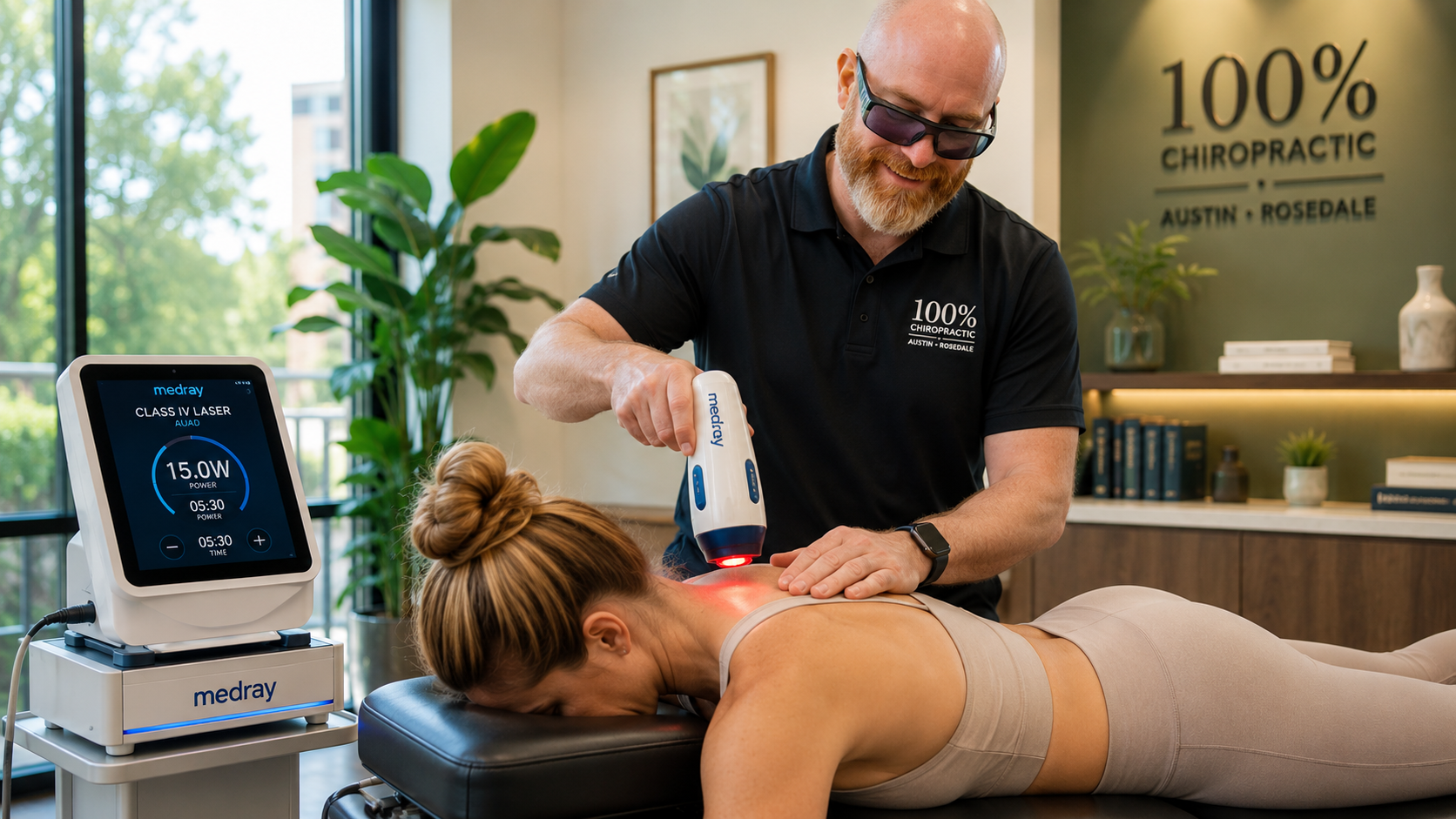
Our clinic uses the Medray Quad Class IV laser: a quad-wavelength device using 650 nm, 810 nm, 915 nm, and 980 nm light with up to 30 W maximum output. Those specs matter because wavelength, power, dose, treatment area, timing, and patient response all shape how laser therapy is applied.
That does not mean Class IV is automatically better for every patient. It means the provider has a different dosing tool and more responsibility to match the settings to the exam findings and care goals.
| Feature | Lower-Powered (e.g. Class III, Cold Laser or Red Light) | Medray Quad Class IV Laser | What It Means for Patients |
|---|---|---|---|
| Wavelengths | Often uses one wavelength or a narrower wavelength range, depending on the device. | Uses four wavelengths: 650 nm, 810 nm, 915 nm, and 980 nm. | Different wavelengths interact with tissue differently; selection still needs clinical judgment. |
| Maximum output | Commonly lower output, often measured in milliwatts rather than tens of watts. | Up to 30 W maximum output. | Higher output can deliver more energy in less time, but more is not automatically better. |
| Dose strategy | Lower output may require longer exposure or smaller treatment zones for some goals. | Higher output allows different dosing strategies across larger or more involved areas. | Dose depends on tissue sensitivity, body area, timing, and response. Overdosing is not the goal. |
| Treatment area | May be better suited to smaller or more superficial treatment areas, depending on settings. | May be used for larger musculoskeletal regions or deeper targets when clinically appropriate. | The provider still needs to choose the right area rather than treating everything broadly. |
| Sensation | Often non-warming or minimally warming. | May create a gentle warming sensation during treatment. | Comfort matters. Settings should be monitored and adjusted during care. |
| Clinical role | Can still be useful in some settings and should not be dismissed. | May be considered as part of an integrated care plan for tissue-focused support. | The right tool depends on exam findings, goals, precautions, and response. |
| Safety responsibility | Still requires proper use and appropriate eye protection. | Requires trained use, eye protection, and careful dosing because of higher output. | Higher power means greater responsibility, not automatic superiority. |
What laser is used for here
Laser therapy may be considered when the evaluation suggests irritated soft tissue, inflammation-related discomfort, muscle guarding, joint-related pain, or recurring pain patterns may benefit from additional tissue-focused support.
May be considered when tissue sensitivity or irritation appears to be part of the recurring pattern.
Used only when the exam suggests tissue-focused support may fit the broader care plan.
Can be useful to consider when symptoms calm down briefly but keep returning.
May support comfort and movement when guarding is connected to irritated tissue or movement stress.
May fit active patients dealing with recurring irritation from work, training, or daily movement demands.
Sometimes discussed for nerve-related symptoms, but recommendations depend on evaluation findings and are not guaranteed.
What it may support
Why temporary relief often does not last
Temporary relief can be useful during a flare-up, but symptoms may return if the broader pattern is not evaluated.
In our clinic, recommendations are based on posture, mobility, joint motion, muscle guarding, soft tissue irritation, and daily stress patterns. Laser therapy is considered only when clinically appropriate.
 Often focuses on calming symptoms during a flare-up.
 May help temporarily.
 Can be useful, but symptoms may return if the broader pattern is not evaluated.
 Reviews symptom history, movement patterns, tissue sensitivity, posture, and exam findings.
 Considers laser therapy only when clinically appropriate.
 Combines care options based on what the evaluation shows.
What patients often notice
Patients often ask about laser therapy after noticing the same pattern returning despite stretching, rest, massage, or short-term relief.
A clear evaluation first
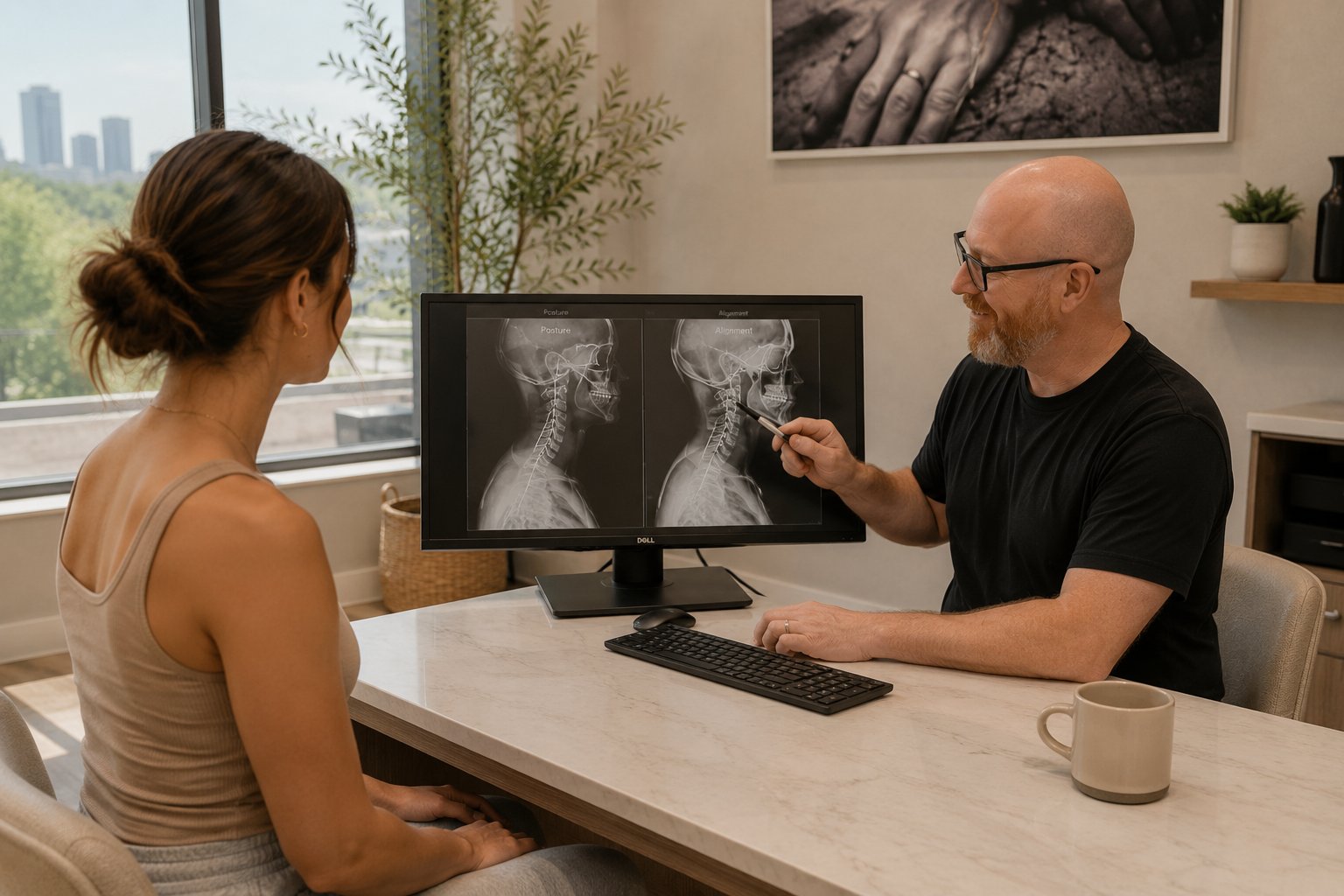
Our evaluation looks at the full pattern: symptom history, mobility, posture, orthopedic findings, muscle guarding, soft tissue irritation, movement habits, and whether additional imaging or referral is appropriate.
Laser therapy may be included when it fits the findings and goals of care. It is one option within a broader plan, not a replacement for careful evaluation.

Our integrated approach
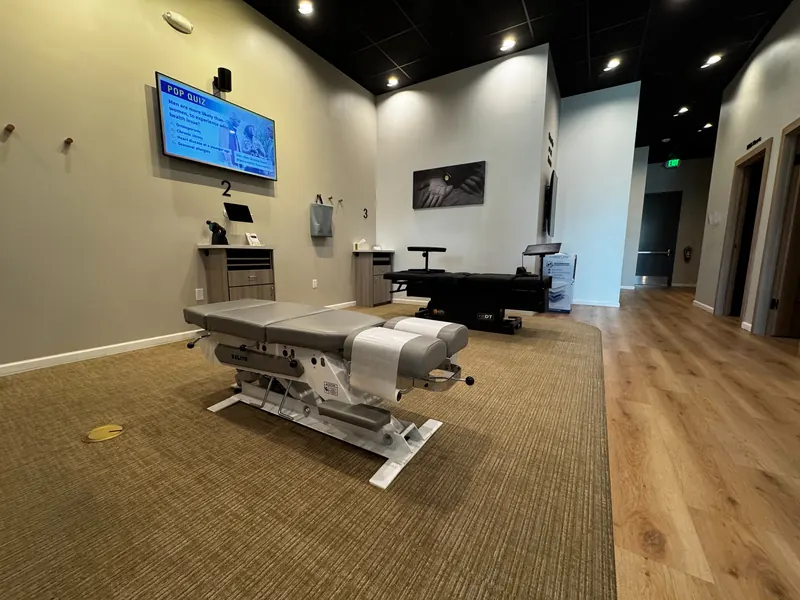
Laser therapy works best when it is not treated like a standalone shortcut. At 100% Chiropractic Austin Rosedale, it may be used as part of a broader evaluation-driven care model.
Tissue-focused support that may help with irritated soft tissue and inflammation-related discomfort when clinically appropriate.
Supports joint motion and spinal mechanics so tissue-focused care is not fighting restricted movement.
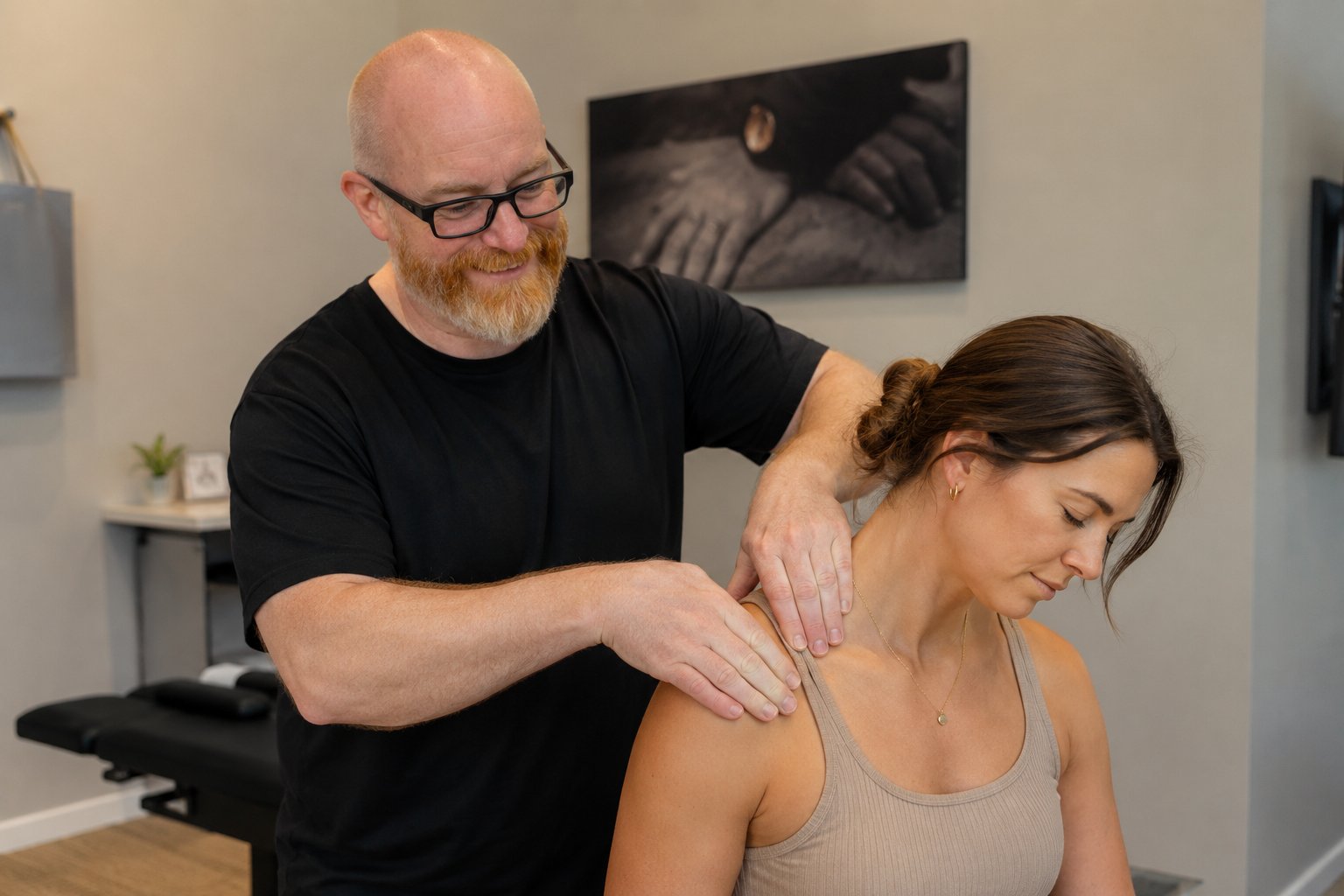
Helps address muscle, tendon, fascia, and movement-related restrictions.
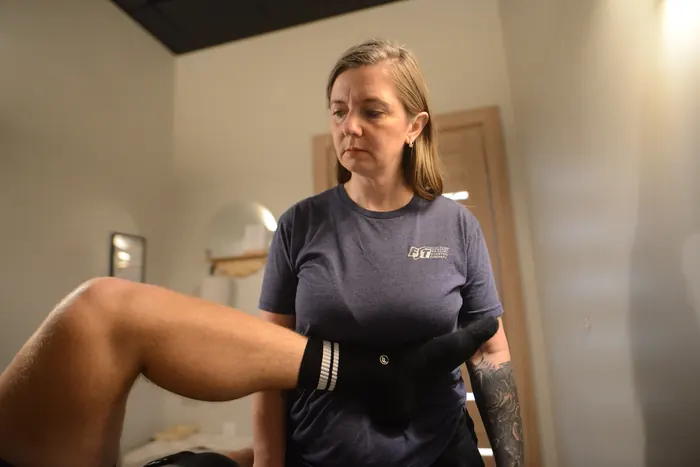
Supports mobility and connective tissue restrictions through assisted stretch work.
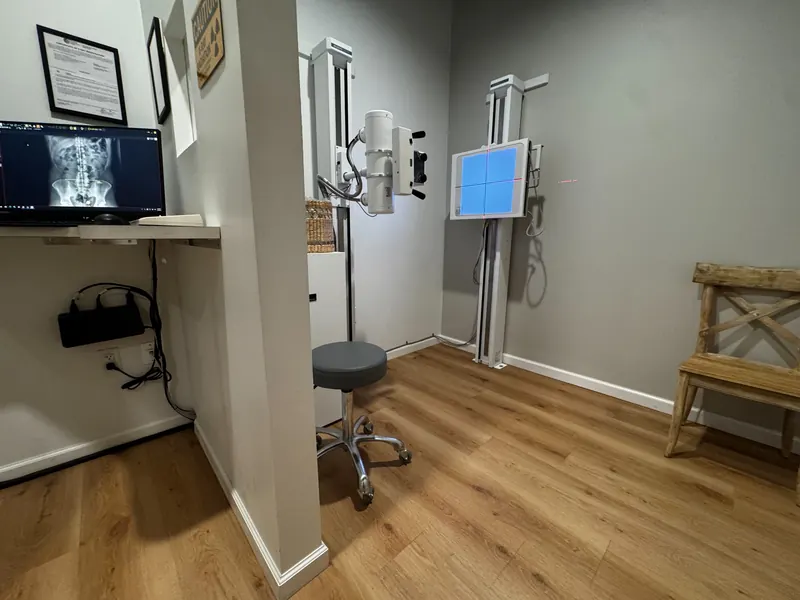
Helps patients build better movement habits outside the clinic.
Why choose this clinic
Laser therapy works best when it is not treated like a standalone shortcut. Our clinic uses it as part of a broader evaluation-driven care model.
Recommendations start with your history, movement, posture, orthopedic findings, and goals.
Care options may include chiropractic care, stretch therapy, soft tissue work, laser therapy, and exercise guidance.
Laser therapy can be considered when tissue findings and care goals make it appropriate.
Patients work with a clinic director experienced in evaluating recurring pain, stiffness, and movement limitations.
You leave with a better understanding of what may be contributing to your symptoms and what options may make sense.
Patient stories
Google rating source videos and educational content may help patients understand the clinic experience for recurring pain, stiffness, mobility issues, or movement limitations. These stories are general patient proof and are not presented as laser-specific outcomes.
A focused evaluation can help identify whether posture, mobility, muscle guarding, or soft tissue irritation may be contributing to the pattern.
Class IV laser therapy uses therapeutic light energy and may be considered as part of a broader care plan for certain soft tissue, joint, and musculoskeletal complaints. Recommendations depend on the evaluation.
Class IV laser therapy applies therapeutic light energy to targeted tissue. Research often discusses this process as photobiomodulation, which may support cellular activity, circulation-related processes, and inflammatory modulation when clinically appropriate.
Many patients describe a gentle warming sensation. Your clinician will adjust treatment based on comfort, tissue area, and clinical findings.
It may support care for recurring pain, soft tissue irritation, stiffness, muscle guarding, inflammation-related discomfort, and movement-related complaints when clinically appropriate.
Usually no. In our clinic, laser therapy is considered as part of an integrated care plan that may include chiropractic care, fascia stretch therapy, soft tissue work, corrective exercise, or other options.
We look at symptom history, mobility, posture, orthopedic findings, muscle guarding, soft tissue sensitivity, and whether imaging or referral may be appropriate.
Laser therapy is considered only after evaluation and screening. Your clinician will explain whether it makes sense for your case and what precautions may apply.
Session recommendations vary based on findings, goals, symptom history, and whether laser therapy is combined with other care.
Laser therapy may support inflammation-related discomfort for some patients, but it is not a cure or guarantee. It is considered when findings suggest irritated tissue may be part of the pattern.
Some patients ask about laser therapy for nerve-related symptoms. Recommendations depend on the evaluation and contributing factors. Laser therapy should not be understood as guaranteed neuropathy reversal.
When to get checked
If pain, stiffness, or irritated tissue keeps returning, a focused evaluation can help clarify what may be contributing to the pattern and whether laser therapy makes sense as part of your care plan.
Local Class IV laser therapy in Central Austin
100% Chiropractic Austin Rosedale is located at 3800 N Lamar Blvd, Ste 160, Austin, TX 78756. Patients visit us to understand whether laser therapy may fit a broader care plan for recurring pain, soft tissue irritation, stiffness, and movement-related discomfort.
100% Chiropractic Austin Rosedale
3800 N Lamar Blvd, Ste 160
Austin, TX 78756
(512) 638-8544
Mon-Thu: 8:00am - 12:00pm; 1:30pm - 5:30pm
Fri: 8:00am - 12:00pm
The clinic sits between Local Foods and Westlake Dermatology facing Lamar Blvd and in the same building as Kendra Scott's HQ. We validate parking in the clinic. For garage GPS, use 3809 Medical Pkwy.
Get DirectionsRated 4.9/5.0 on Google
Many patients are looking for a clearer explanation of why symptoms continue returning and what steps may support longer-term improvement.
Patients often want clearer answers, calm guidance, and next steps that match their findings.
Read current Google reviews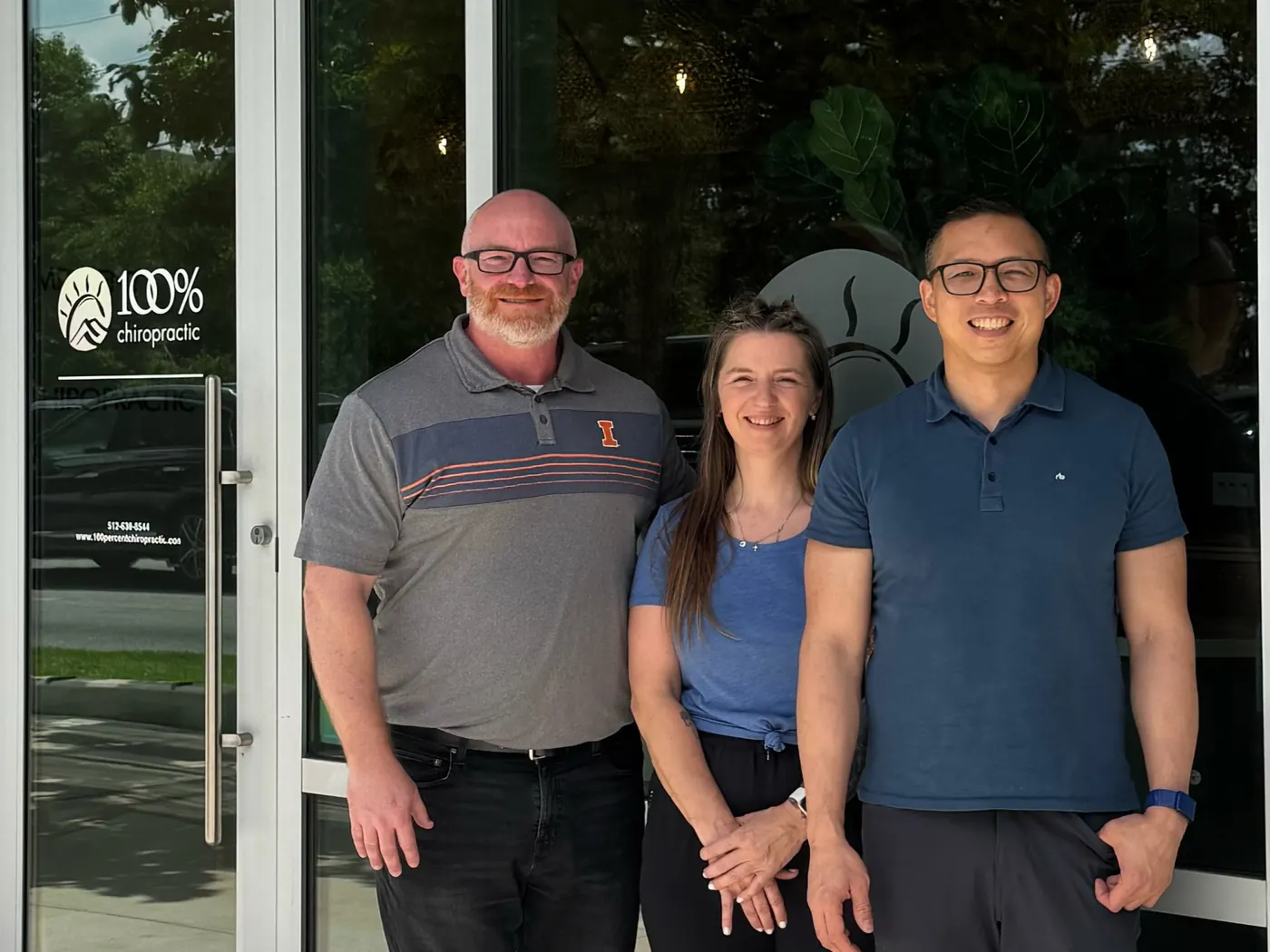
If recurring pain, stiffness, or tissue irritation keeps slowing you down, the next step is a focused evaluation to understand what may be contributing to the pattern and whether laser therapy may fit your care plan.
Same-day and same-week appointments are often available.
MendAndFlow is a healthcare-provider directory and patient-education platform owned and operated by Quake Brands LLC.
This clinic profile and its related educational and online-scheduling pages feature 100% Chiropractic Austin Rosedale.
Clinical services are provided by 100 Chiro Corona LLC d/b/a 100% Chiropractic Austin Rosedale, an independently owned and operated 100% Chiropractic franchise.
Appointment requests made through these pages are for the Austin Rosedale clinic. MendAndFlow does not provide clinical care and is not the corporate 100% Chiropractic website.
100% Chiropractic Austin Rosedale Class IV Laser Evaluation
Book Evaluation
Class IV Laser Evaluation
Book Evaluation