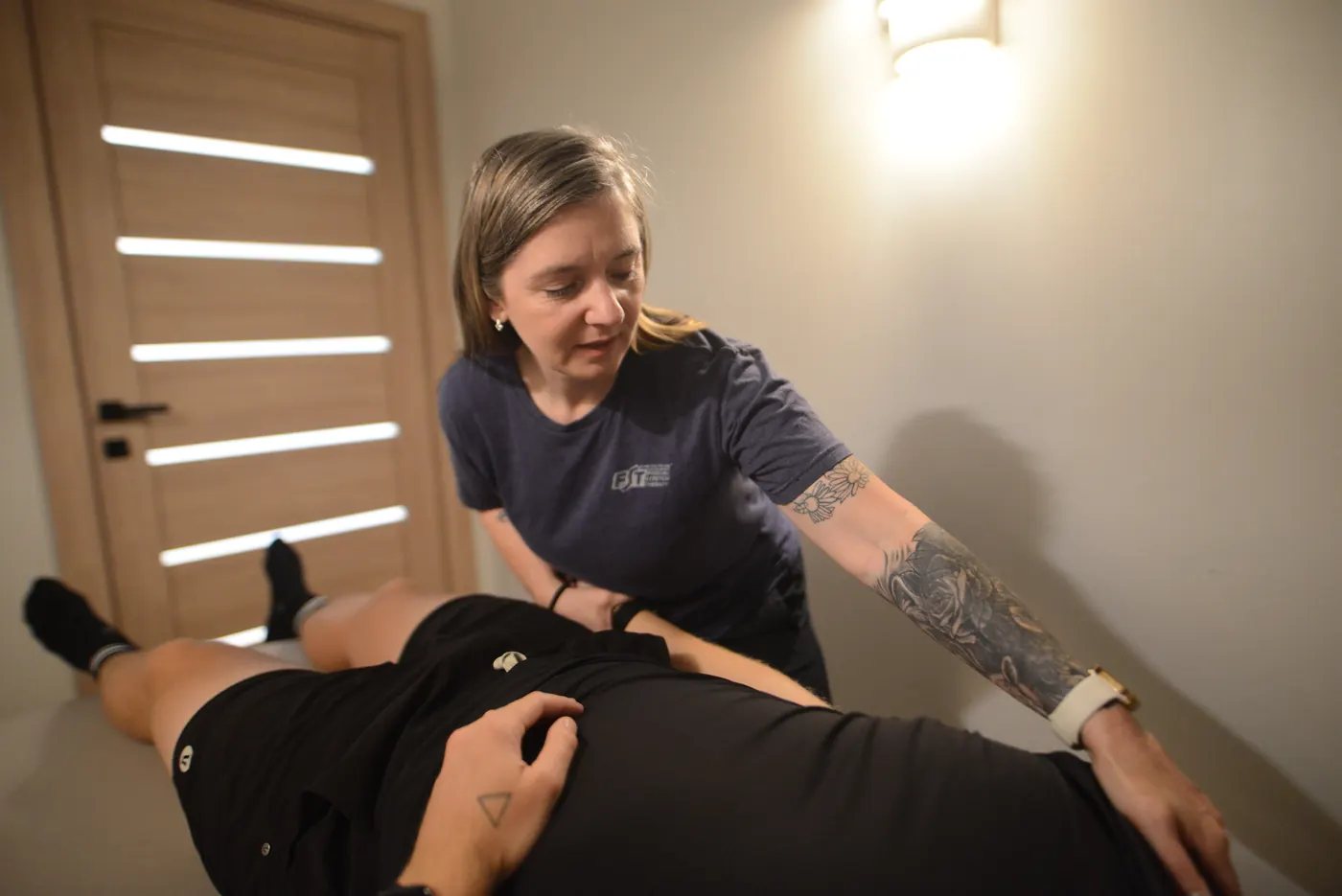
Therapist-guided
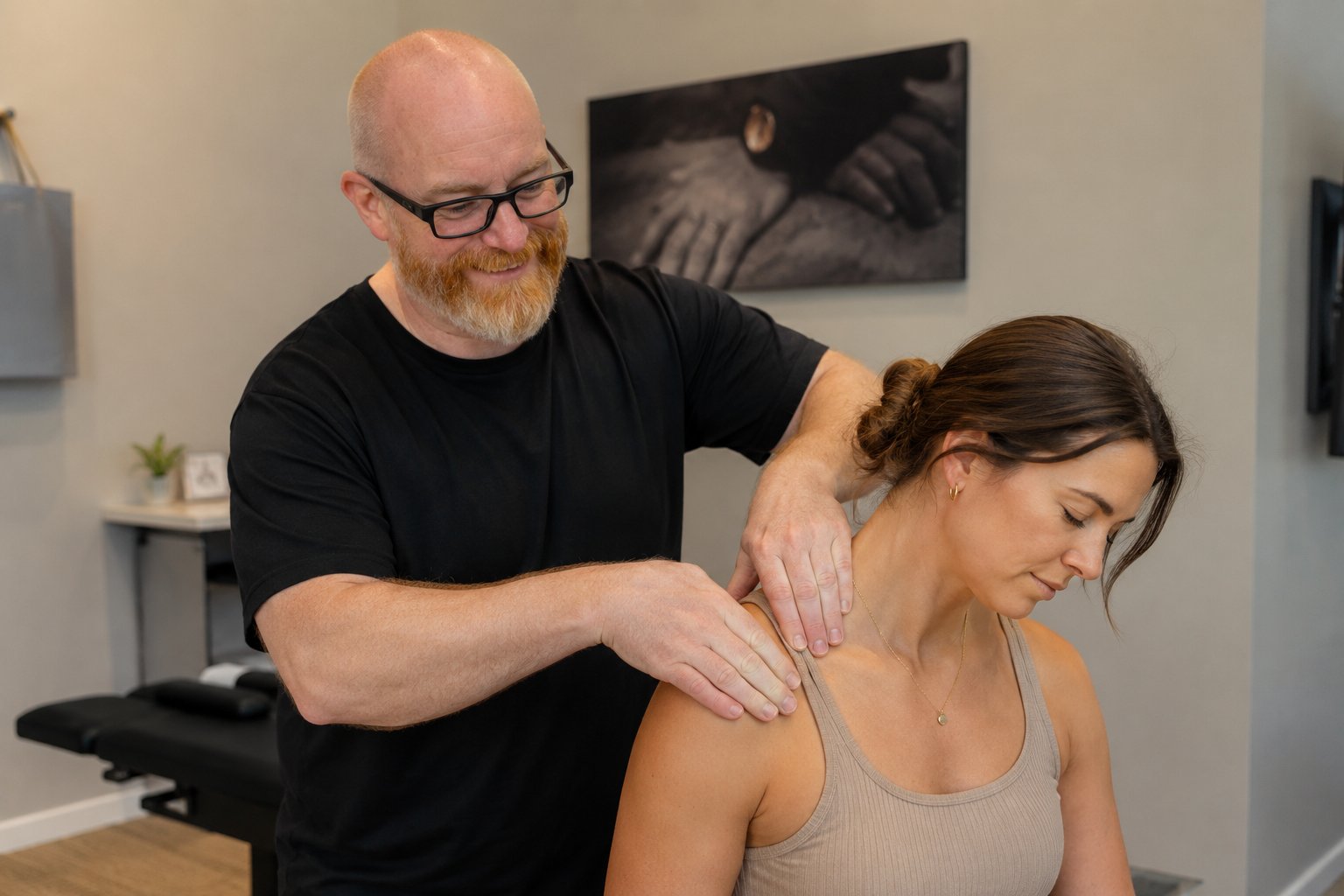
You are not guessing through a self-stretch routine. A trained practitioner guides the session and adjusts to your response.


 Book Your $49 First Experience
Clinic information, patient education, and online scheduling for 100% Chiropractic Austin Rosedale on MendAndFlow.
100% Chiropractic Austin Rosedale 3800 N Lamar Blvd, Ste 160 Austin, TX 78756 (512) 638-8544Fascia Stretch Therapy in Austin, TX
Fascia Stretch Therapy is not just assisted stretching. It is a therapist-guided, table-based system designed to work with fascia, joints, muscles, and the nervous system to support mobility and reduce recurring tightness.
At 100% Chiropractic Austin Rosedale, FST is integrated with corrective chiropractic care, soft tissue therapy, Class IV laser, decompression, and movement support when appropriate.
Our Central Austin/Rosedale clinic often has same-day and same-week appointments available for new patients.
Guided stretch therapy, not generic stretching.
What FST is
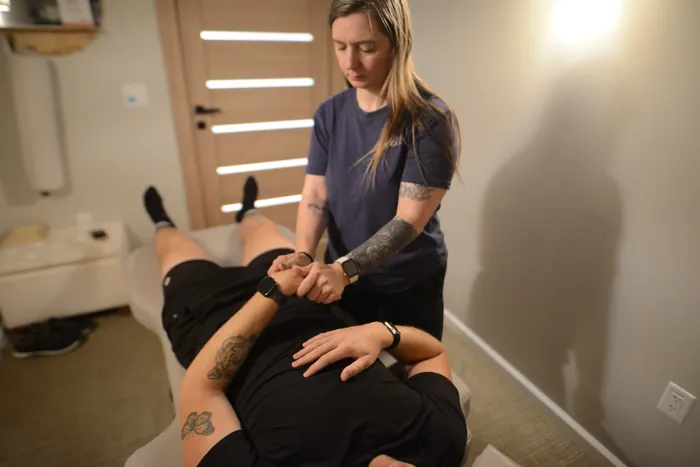
Fascia Stretch Therapy is a table-based, therapist-guided assisted stretching system focused on the fascia, joints, muscles, and nervous-system response. It is not just holding a stretch longer, and it is not the same as generic assisted stretching or a stretch studio-style assisted stretching session.
The practitioner uses traction, gentle movement, positioning, breath, oscillation, and stretch sequencing to help the body access more comfortable range of motion. At this clinic, FST is used as part of a broader corrective-care plan when it fits the evaluation.
You are not guessing through a self-stretch routine. A trained practitioner guides the session and adjusts to your response.
FST commonly uses traction, positioning, and breath before asking the tissue to move farther.
The session works through linked regions instead of treating every tight spot as an isolated muscle problem.
Why fascia matters
Fascia is connective tissue that helps organize, wrap, and connect muscles, joints, nerves, and other structures. It is not just passive wrapping. Fascia is increasingly discussed in movement science because of its role in force transmission, proprioception, mobility, and pain sensitivity.
Research is still evolving, and fascia does not explain every pain pattern. But for some patients, repeated sitting, training, stress, injury, or limited movement may contribute to tissues feeling restricted, guarded, or less able to glide as part of a broader movement pattern.
Fascia helps link muscles, joints, and movement patterns, which is why one restricted area may influence another.
Comfortable movement depends partly on tissue layers moving well relative to each other.
Fascia is involved in how the body senses position, pressure, tension, and movement.
Repeated postures, training loads, stress, or injury may change how tissue feels and moves for some patients.
Stretch to Win FST
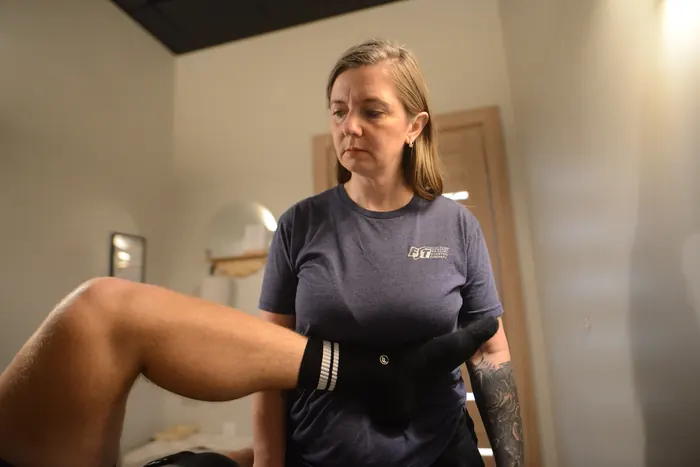
Stretch to Win Fascia Stretch Therapy is a specific system, not just a category label. It uses table-based assisted stretching, traction, breath, gentle oscillation, and sequencing to work with the body's available range of motion.
The practitioner is trained to adjust the session based on how the body responds, rather than simply pushing harder into a stretch. The value is formal hands-on training in the FST system, not just general stretching experience.
Fascia Stretch Therapy sessions are coordinated with the clinic's broader corrective-care approach when appropriate.
What to expect
FST should not feel like someone forcing your body into a painful stretch. Sessions are generally guided, assisted, and adjusted to your tolerance. You may feel stretch, traction, warmth, or a sense of tissue opening, but the goal is more comfortable range of motion, not chasing pain.
Most sessions are performed fully clothed on a treatment table. Comfortable clothing helps the practitioner move you through range.
You stay supported while the practitioner guides position changes, traction, and assisted stretching.
Breathing and relaxation help the body reduce guarding instead of bracing against the stretch.
The session should be responsive. Sharp pain or unsafe discomfort is not the goal.
The session is tied back to your evaluation, mobility findings, and broader care plan.
Compare your options
The point is not that one method is always better. The point is that they solve different problems. FST is most useful when recurring tightness, guarded movement, and restricted range need a guided, table-based approach connected to a broader evaluation.
| Method | Main focus | What happens | Best fit |
|---|---|---|---|
| Self-Stretching | General flexibility and range of motion. | You move yourself into a stretch and hold or repeat it. | Daily mobility maintenance and simple tightness. |
| Dynamic Stretching | Movement preparation and warm-up. | You actively move through ranges of motion, often before training or sport. | Warming up, athletic preparation, coordination, and movement rehearsal. |
| Generic Assisted Stretching | Helping someone move farther into a stretch. | A practitioner assists the stretch, but the session may not follow a specific fascial sequencing system. | General flexibility support. |
| Fascia Stretch Therapy | Fascia, joint mobility, nervous-system response, and connected movement patterns. | A trained practitioner uses table-based assisted stretching with traction, positioning, breath, oscillation, and sequencing. | Recurring tightness, mobility restriction, posture stress, and patients who need guided movement support as part of a broader plan. |
| Massage | General soft tissue relaxation and comfort. | Passive soft tissue work, usually without the same joint traction or stretch sequencing. | General soreness, relaxation, and broad muscle tension. |
| Active Release / Soft Tissue Therapy | Adhesions, scar-tissue restrictions, tissue glide, and specific soft tissue restrictions. | Precise contact plus patient movement through a specific range. | Targeted muscle, tendon, fascia, nerve-interface, or overuse patterns. |
| Chiropractic Care | Joint motion, spinal mechanics, posture, and movement patterns. | Adjustments or mobilization may be used when appropriate. | Restricted joint motion, spinal stiffness, posture stress, and mechanical movement issues. |
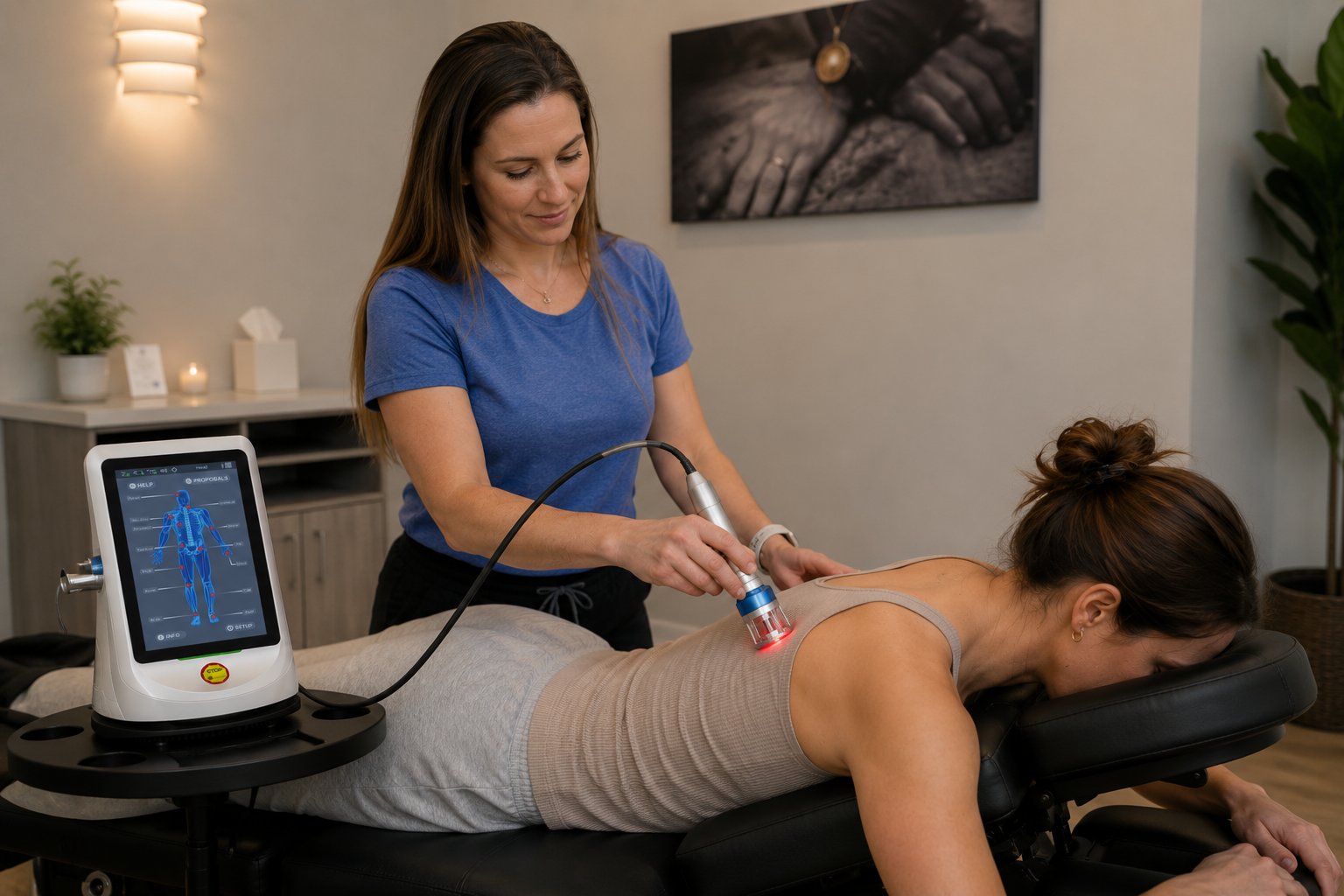
| Class IV Laser Therapy | Irritated soft tissue and inflammation-related discomfort. | Light energy is applied to tissue when clinically appropriate. | Supporting irritated tissue; it does not replace guided stretch sequencing or mobility work. |
Common signs
Many Central Austin patients ask about Fascia Stretch Therapy after trying stretching, massage, foam rolling, or mobility routines without understanding why the same restriction keeps returning.
Austin movement restoration
We commonly work with desk workers, professionals, active adults, runners, golfers, pickleball players, and parents throughout Central Austin who feel tight, guarded, restricted, or stuck in recurring movement patterns.
Long hours at a laptop can leave the neck, shoulders, hips, and low back feeling compressed or guarded.
Runners, golfers, pickleball players, and gym-goers may notice the same mobility restrictions limiting daily movement or workouts.
Commutes, work-from-home setups, travel, and family routines can rebuild the same tightness patterns over time.
Relief vs plan
Temporary stretching can be useful. But recurring mobility restrictions often require a closer look at fascia, joint motion, muscle guarding, and the nervous system's willingness to let the body move.
What patients often notice
Recurring restriction can feel confusing because it may temporarily improve, then return with the same daily stress patterns.
Short-term relief may not address the broader posture, mobility, or guarding pattern.
Mobility restrictions can involve fascia, muscles, joints, and how the body compensates.
Austin desk work, traffic, and travel can rebuild the same restriction pattern.
Range of motion may change when the body feels guarded or overloaded.
That pattern may mean the underlying movement stress needs evaluation.
A focused evaluation can help clarify likely contributing factors.
Evaluation-first care
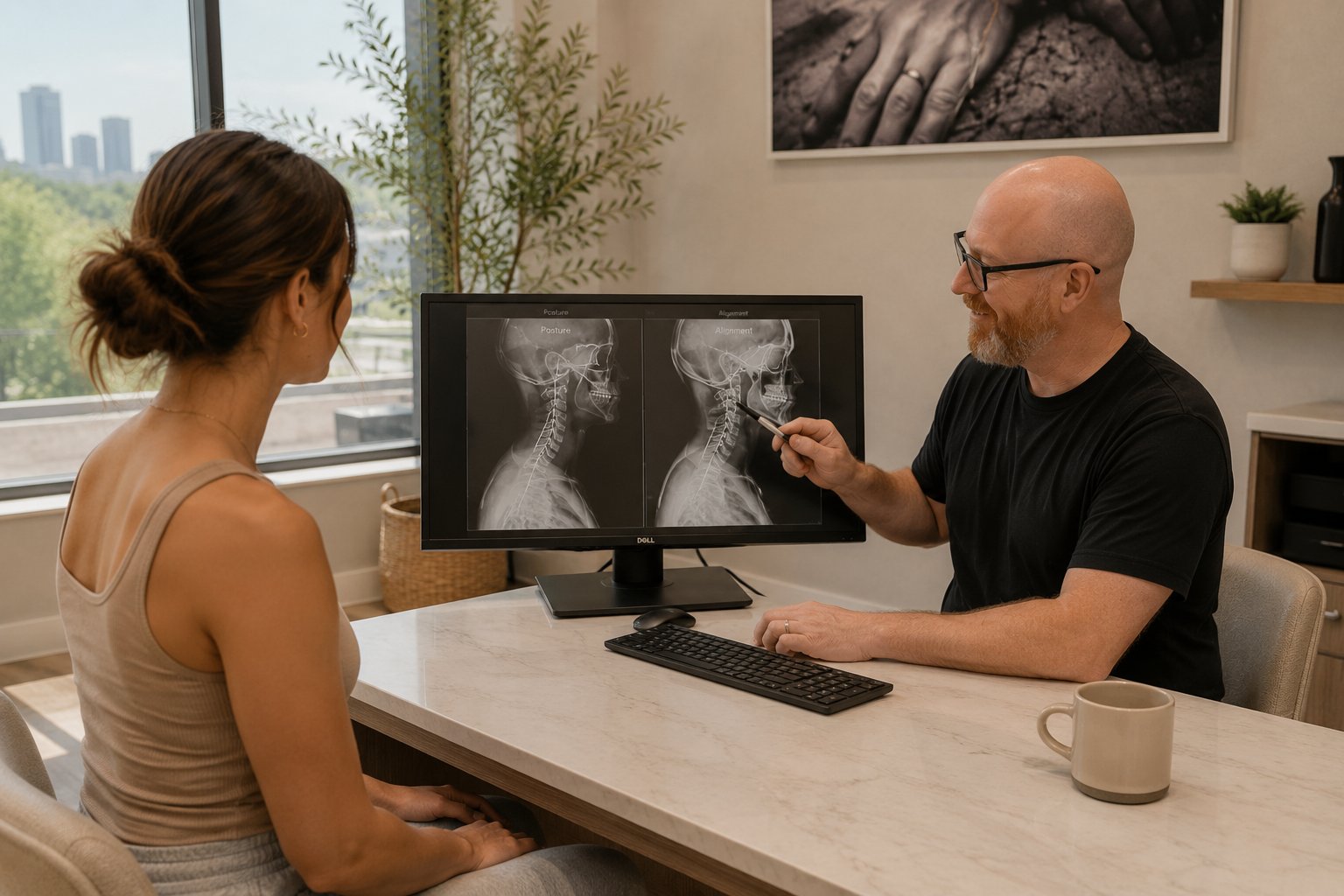
Our evaluation looks at the full pattern: symptom history, posture, mobility, joint motion, muscle guarding, fascia restrictions, movement habits, orthopedic findings, and whether other care options are appropriate. Fascia Stretch Therapy may be included when it fits the findings and goals of care.
Symptom history, mobility restrictions, range of motion, posture, movement patterns, and soft tissue findings.
Care may include Fascia Stretch Therapy, chiropractic care, soft tissue work, laser therapy, or corrective movement support.
Movement and postural training help your body hold progress outside the clinic.
Our integrated approach
FST is one tool in the clinic's corrective-care model. It can help address table-based stretch and mobility findings, while other services address joint mechanics, targeted soft tissue restrictions, irritated tissue, or movement habits when appropriate.
Table-based assisted stretch work using traction, breath, positioning, and sequencing to support mobility and tissue glide.
Supports joint motion so stretching is not fighting restricted mechanics.
Addresses targeted tissue restrictions, adhesions, and soft tissue glide when appropriate.
May support irritated soft tissue and inflammation-related discomfort when clinically appropriate.
Helps patients maintain better movement habits outside the clinic.
Provider credibility
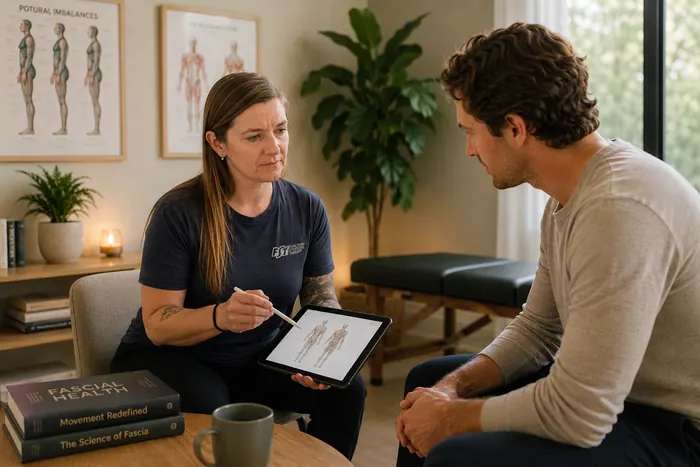
FST is provider-delivered, hands-on assisted stretch therapy. At 100% Chiropractic Austin Rosedale, sessions are performed by a trained practitioner and integrated with the clinic's broader corrective-care approach.
FST may include table-based assisted stretch therapy for upper and lower body mobility work, depending on the evaluation and patient goals.
Fascia Stretch Therapy sessions are coordinated with the clinic's broader corrective-care approach when appropriate.
Why choose this clinic
Fascia Stretch Therapy works best when it is connected to the bigger picture. Our clinic combines evaluation, chiropractic care, assisted stretching, soft tissue therapy, laser, and movement support under one roof.
We look at posture, mobility, muscle guarding, joint motion, and daily stress patterns before recommending care.
Stretch therapy can be coordinated with chiropractic care, soft tissue therapy, laser, decompression, and movement support.
FST is delivered as hands-on, table-based stretch therapy and coordinated with evaluation findings.
Patients work with a Central Austin clinic team experienced in recurring tightness, stiffness, and movement limitations.
Patients leave understanding what may be contributing to the pattern and what options may make sense.





Fascia Stretch Therapy is a therapist-guided, table-based assisted stretching system that uses traction, breath coordination, positioning, oscillation, and sequencing to work with fascia, joints, muscles, and nervous-system response. Recommendations depend on your evaluation findings.
Regular stretching is usually self-directed and focused on holding or repeating a stretch. FST is practitioner-guided and uses table-based positioning, traction, breath, and sequencing so the session is adjusted to how your body responds.
Dynamic stretching is active movement, often used as a warm-up before workouts or sport. FST is passive-to-assisted table work performed by a practitioner and is usually used for recurring tightness, restricted range, or guarded movement patterns rather than simple warm-up preparation.
Many assisted-stretch services focus on general flexibility. Stretch to Win FST is a specific practitioner-trained system that uses table-based positioning, traction, breath, oscillation, and sequencing. At our clinic, it is also connected to a chiropractic evaluation and broader care plan when appropriate.
Massage often focuses on soft tissue comfort and relaxation through manual pressure. FST is an assisted movement session that uses traction, positioning, breath coordination, and stretch sequencing to support mobility and movement quality when appropriate.
Active Release and soft tissue therapy are more targeted contact-based methods for specific tissue restrictions, adhesions, or overuse patterns. FST is broader table-based assisted stretch work using traction, breath, and sequencing through connected ranges of motion.
Chiropractic care focuses on joint motion, spinal mechanics, posture, and mechanical movement issues. FST focuses more on assisted stretch sequencing, fascia, tissue glide, and range of motion. They can work together when the evaluation suggests both restricted joints and restricted soft tissue movement.
Physical therapy is a licensed healthcare discipline that may include diagnosis, rehabilitation, exercise prescription, and recovery plans after injury or surgery. Fascia Stretch Therapy is a practitioner-guided assisted stretch system. Stretch to Win's history describes Ann Frederick as developing FST from a dance, human-movement, kinesiology, and biomechanics background, and Chris Frederick as a physical therapist. At this clinic, FST is not a substitute for prescribed PT; it may be considered as part of a broader mobility and corrective-care plan when appropriate.
FST should not feel like forced stretching. You may feel stretch, traction, warmth, or a sense of tissue opening, but sharp pain or unsafe discomfort is not the goal. Sessions should be adjusted to your tolerance.
You remain clothed on a treatment table while the practitioner guides assisted stretches and position changes. The session may include traction, breath cueing, gentle oscillation, and sequencing through connected regions based on your evaluation and comfort.
FST is performed by a trained practitioner; confirm current credential details with the clinic. Sessions are coordinated with the clinic's broader corrective-care approach when appropriate.
At this clinic, FST is commonly considered within a broader corrective-care approach that may include chiropractic care, Active Release or soft tissue therapy, Class IV laser therapy, decompression, or movement guidance when appropriate.
For some patients, FST may support recurring tightness, stiffness, posture stress, muscle guarding, and mobility restrictions involving the hips, hamstrings, shoulders, neck, upper back, or low back. It is not a cure-all, and recommendations depend on evaluation findings.
When to get checked
If tightness, stiffness, or mobility restriction keeps returning, a focused evaluation can help clarify what may be contributing to the pattern and whether Fascia Stretch Therapy makes sense as part of your care plan.
Local Fascia Stretch Therapy in Central Austin
100% Chiropractic Austin Rosedale is located at 3800 N Lamar Blvd, Ste 160, Austin, TX 78756. Patients visit us for recurring tightness, stiffness after sitting, posture stress, mobility restrictions, and movement patterns that keep returning after temporary relief.
100% Chiropractic Austin Rosedale
3800 N Lamar Blvd, Ste 160
Austin, TX 78756
(512) 638-8544
Mon-Thu: 8:00am - 12:00pm; 1:30pm - 5:30pm
Fri: 8:00am - 12:00pm
The clinic sits between Local Foods and Westlake Dermatology facing Lamar Blvd and in the same building as Kendra Scott's HQ. We validate parking in the clinic. For garage GPS, use 3809 Medical Pkwy.
Get DirectionsRated 4.9/5.0 on Google
Many patients are looking for a clearer explanation of why symptoms continue returning and what steps may support longer-term improvement.
Some patients wait until symptoms keep returning before seeking a clearer evaluation and next steps.
Read current Google reviews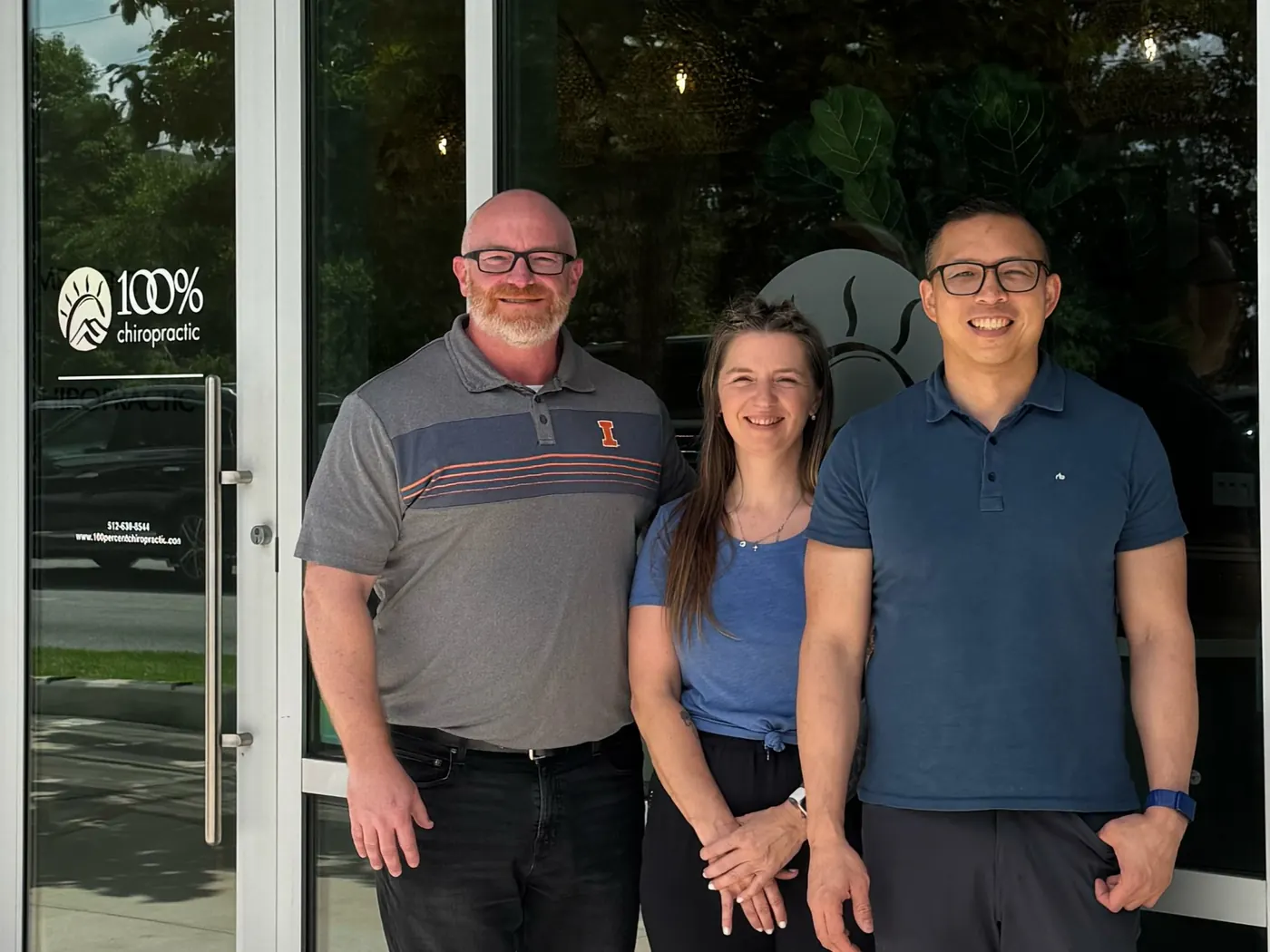
If tightness, stiffness, or mobility restriction keeps coming back, the next step is a focused evaluation to understand what may be contributing to the pattern and whether Fascia Stretch Therapy may fit your care plan.
Same-day and same-week appointments are often available.
MendAndFlow is a healthcare-provider directory and patient-education platform owned and operated by Quake Brands LLC.
This clinic profile and its related educational and online-scheduling pages feature 100% Chiropractic Austin Rosedale.
Clinical services are provided by 100 Chiro Corona LLC d/b/a 100% Chiropractic Austin Rosedale, an independently owned and operated 100% Chiropractic franchise.
Appointment requests made through these pages are for the Austin Rosedale clinic. MendAndFlow does not provide clinical care and is not the corporate 100% Chiropractic website.
100% Chiropractic Austin Rosedale Book Your $49 First Experience
Book Evaluation
Book Your $49 First Experience
Book Evaluation