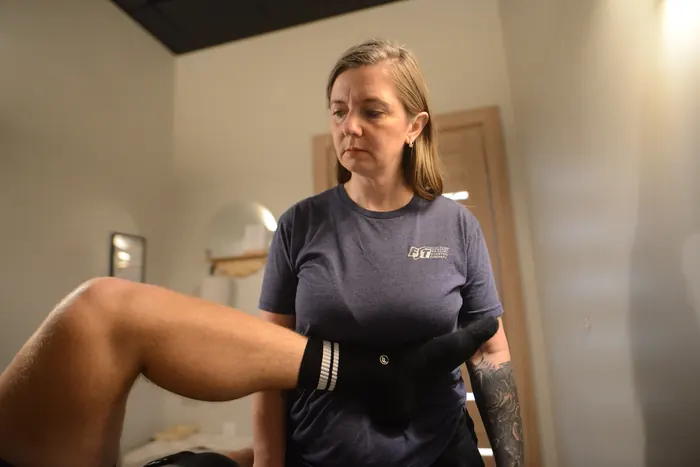
Precise contact
The provider identifies tissue that feels restricted, guarded, tender, or unable to glide normally.


 Book Your $49 First Experience
Clinic information, patient education, and online scheduling for 100% Chiropractic Austin Rosedale on MendAndFlow.
100% Chiropractic Austin Rosedale 3800 N Lamar Blvd, Ste 160 Austin, TX 78756 (512) 638-8544Corrective care - movement restoration - soft tissue therapy
Active Release Technique is targeted, movement-based soft tissue care designed to address restricted tissue glide, adhesions, scar-tissue restrictions, and recurring soft tissue tension.
At 100% Chiropractic Austin Rosedale, ART is integrated into a broader corrective-care approach focused on movement quality, posture, spinal mechanics, tissue loading, and long-term function.
Same-day and same-week appointments are often available.
What it is
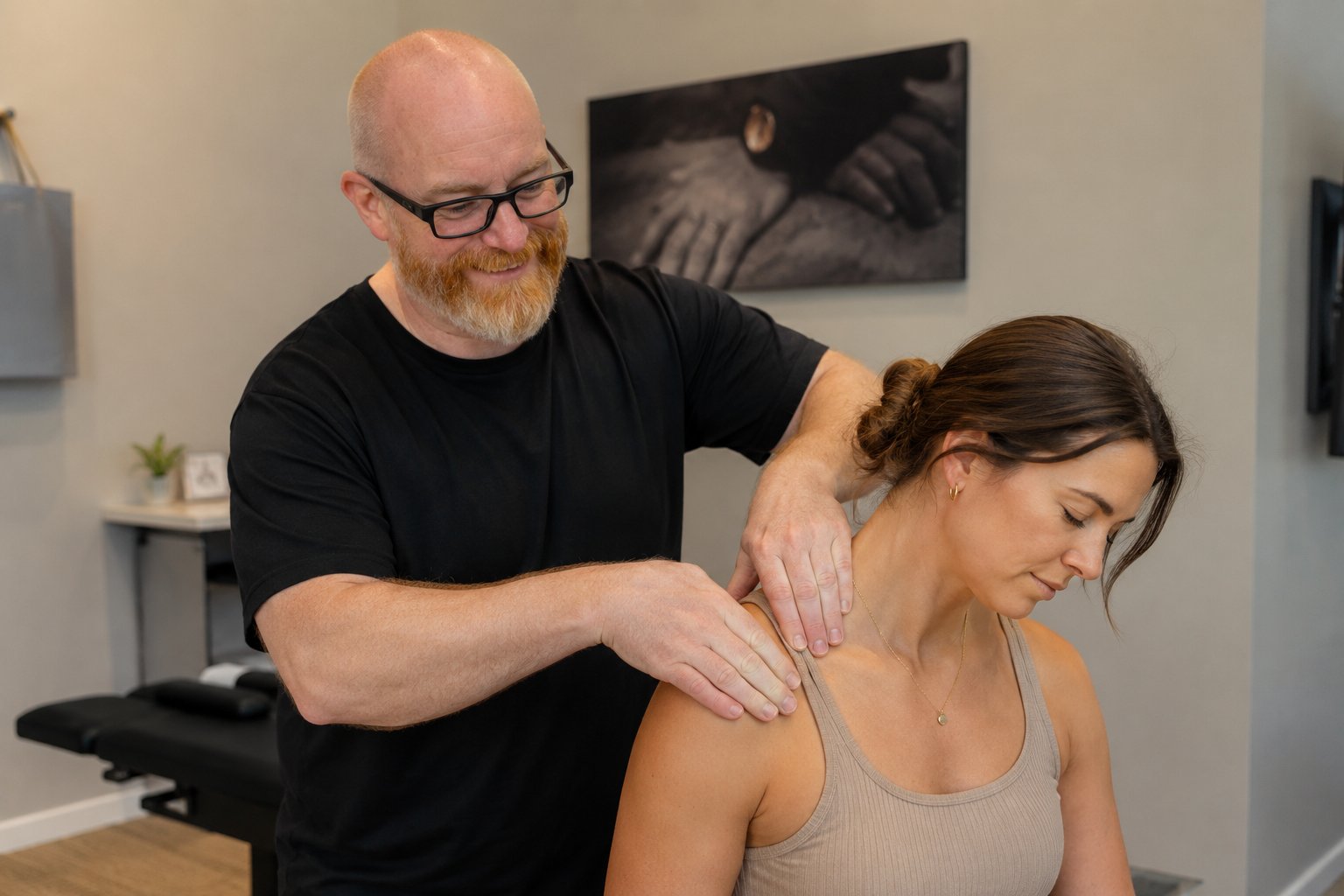
Active Release Technique is targeted, movement-based soft tissue care. The provider applies precise contact to restricted tissue while the patient moves through a specific range. The goal is to help address adhesions, scar-tissue restrictions, and tissue glide - not just relax a tight muscle.
At 100% Chiropractic Austin Rosedale, ART is used as part of an evaluation-informed plan for recurring tightness, stiffness, guarded movement, repetitive strain, and soft tissue restrictions when the findings suggest it fits.
The provider identifies tissue that feels restricted, guarded, tender, or unable to glide normally.
You move through a specific range while the provider maintains contact with the involved tissue.
Care may focus on muscles, tendons, ligaments, fascia, or nerve-related tissue interfaces.
ART is not used because an area feels tight. It is recommended when exam findings and goals support it.
How it works
ART is different from passive soft tissue work because the tissue is contacted while it moves. That combination helps the provider address restriction in the context of motion.
The provider evaluates where tissue feels restricted, guarded, tender, or unable to glide well.
Targeted pressure or tension is applied to the involved tissue and adjusted to the patient's tolerance.
The patient moves through a specific range while the provider maintains contact.
The goal is to help tissue move more freely relative to nearby muscles, fascia, tendons, or nerves when appropriate.
Adhesions and tissue glide
Overuse, repetitive strain, injury, irritation, and guarding can affect how soft tissue glides. Some patients describe this as scar tissue or adhesions. When tissue does not glide well, movement can feel tight, painful, weak, or limited.
ART should not be described as tearing tissue apart. The goal is to use precise contact and movement to help reduce restriction, improve tissue glide, and restore motion where appropriate. Because sensitive or restricted tissue is contacted directly, ART may feel intense, but pressure should be adjusted to tolerance.
Does this sound familiar?
A common pattern we see
Many Central Austin patients describe a version of this story. They keep shifting posture, avoiding rotation, repeatedly stretching the same areas, or waking up tight every day.
It often shows up during Austin tech workweeks, hybrid-work fatigue, Lamar commuting, coffee shop laptop sessions, cycling, paddleboarding, trail running, or walks around Lady Bird Lake.
Different tools, different roles
These services can work together, but they are not interchangeable. The right choice depends on what the evaluation shows.
| Method | Main focus | What happens | Best fit |
|---|---|---|---|
| Active Release / Soft Tissue Therapy | Tissue restrictions, adhesions, scar-tissue restrictions, muscle/tendon/fascia glide, and nerve-related tissue interfaces. | The provider applies precise contact while the patient moves through a specific range. | Recurring tightness, overuse patterns, restricted movement, tendon or fascia irritation, and muscle guarding. |
| Massage | General muscle relaxation, circulation, stress reduction, and broad soft tissue comfort. | Usually passive soft tissue work without the same specific active movement protocol. | General soreness, relaxation, and broad muscle tension. |
| Fascia Stretch Therapy | Assisted mobility, flexibility, joint and fascial mobility, and nervous system relaxation. | The therapist guides the patient through assisted table-based stretching. | Mobility restrictions, flexibility limitations, recurring tightness, and movement range. |
| Chiropractic Care | Joint motion, spinal mechanics, posture, and movement patterns. | Adjustments or mobilization may be used to improve joint motion when appropriate. | Restricted joint motion, spinal stiffness, posture stress, and mechanical movement issues. |
| Class IV Laser Therapy | Tissue-focused support for irritated soft tissue and inflammation-related discomfort when appropriate. | Therapeutic light energy is applied to targeted tissue. | Adjunctive support when evaluation suggests laser may fit the care plan. |
Why tightness may keep returning
Recurring tension is often the body adapting to protect itself from repeated stress. ART can address the tissue component, but the broader pattern still matters: joint motion, posture load, repetitive strain, soft tissue sensitivity, and compensation.
The Compensation Pattern Cycle™ is one way we explain that pattern: restriction or poor mechanics can create abnormal loading, protective tension, reduced movement quality, recurring tightness, temporary relief, and then the same return again.
Stretching, massage, or foam rolling may calm the signal briefly.
Desk work, driving, lifting, training, and travel may keep recreating the same stress.
Tight muscles may be trying to stabilize an area that feels restricted, overloaded, or irritated.
The goal is to pair targeted soft tissue care with a plan that improves how the body moves.
Evaluation first
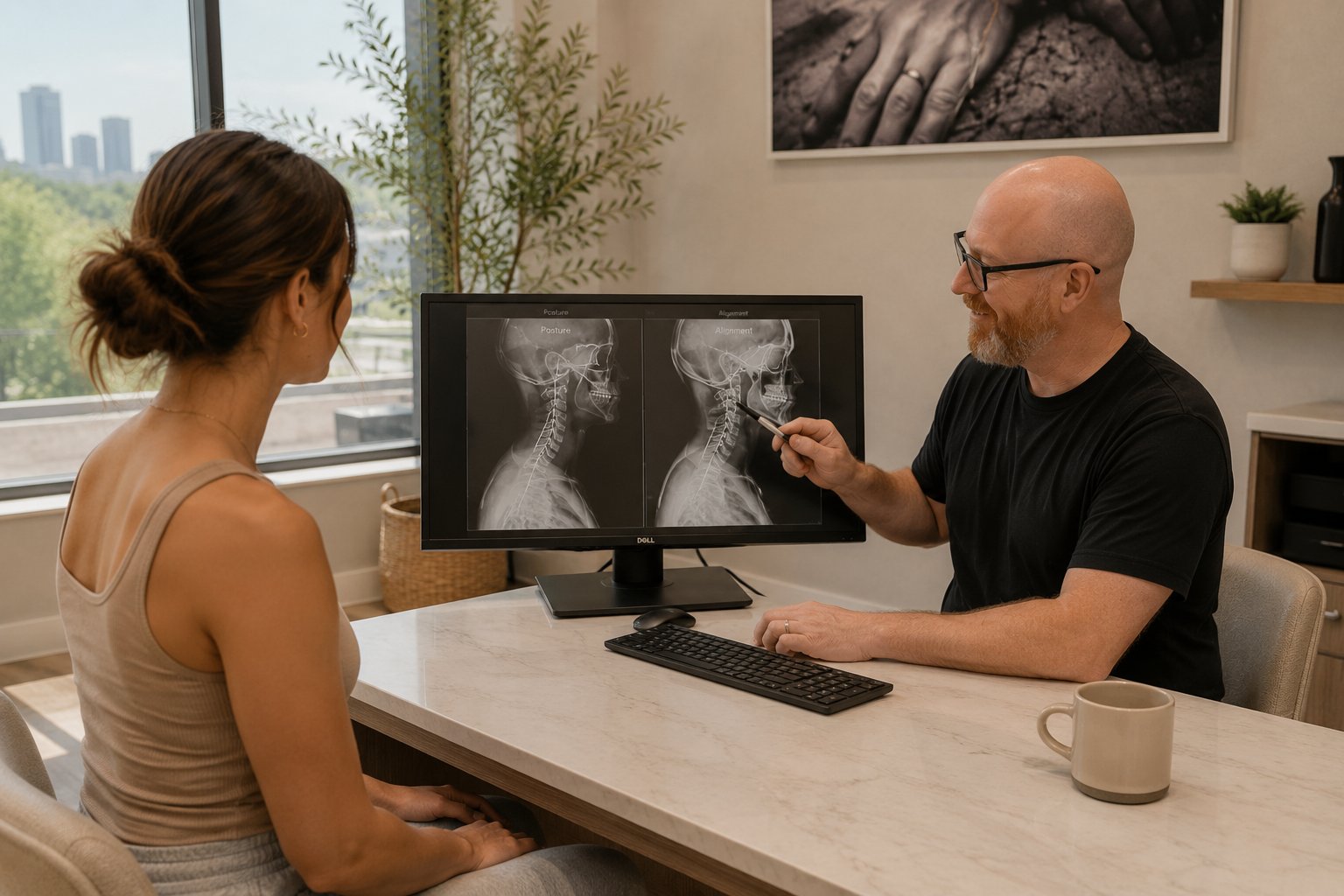
Soft tissue tightness rarely exists in isolation. We look at posture, asymmetric loading, movement quality, stabilization patterns, mobility deficits, spinal mechanics, tissue sensitivity, and compensation strategies.
We assess how you move, where your body compensates, and why the tension may keep returning.
We build a plan using the right techniques for your specific pattern.
Care may include ART, chiropractic care, Fascia Stretch Therapy, Class IV laser, decompression, or movement support.
We adjust recommendations as movement, comfort, and function change.
Recurring tension deserves a better question than, where is it tight? The goal is to understand what the body may be protecting.
Hybrid work, Lamar commuting, coffee shop laptop sessions, cycling, trail running, and paddleboarding can all reveal recurring tissue patterns.
How ART fits our corrective approach
Depending on your findings, your plan may include chiropractic care, Active Release or soft tissue therapy, Fascia Stretch Therapy, Class IV laser therapy, decompression, or corrective movement guidance.
Uses precise contact and patient movement to help address tissue restrictions, adhesions, and soft tissue glide.
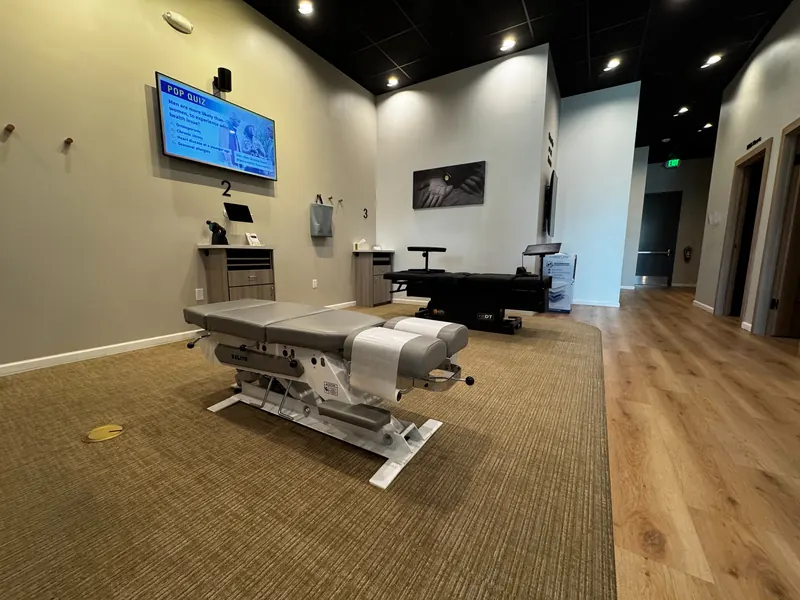
Supports joint motion so soft tissue work is not fighting restricted mechanics.
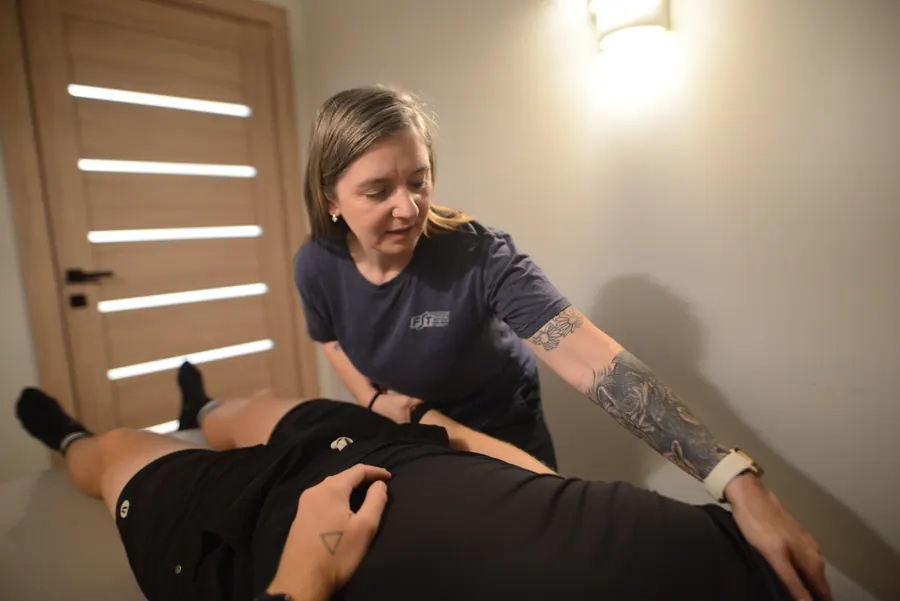
Supports mobility and flexibility through assisted stretch work.
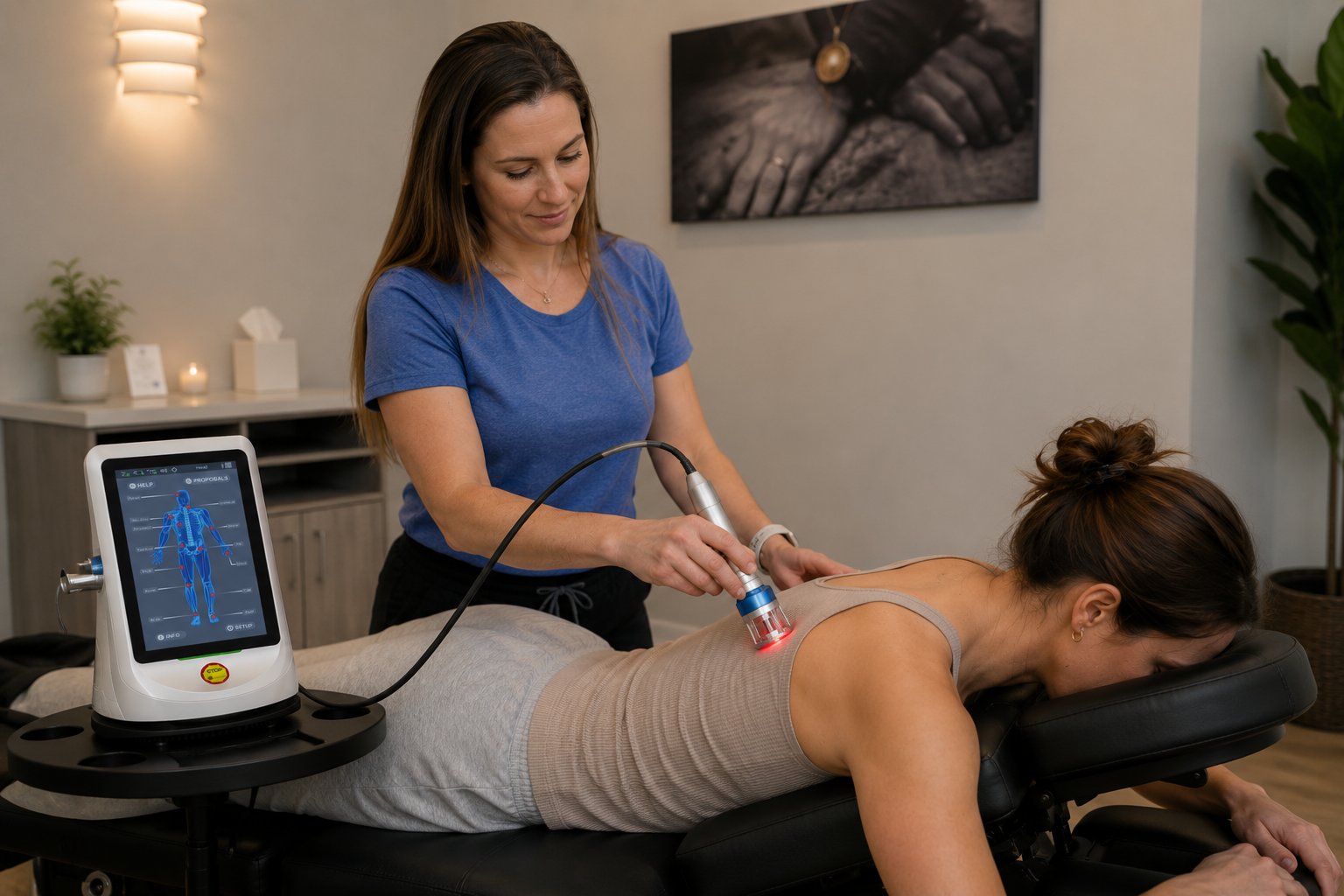
May support irritated soft tissue and inflammation-related discomfort when clinically appropriate.
Active Release Technique is targeted, movement-based soft tissue care. The provider applies precise contact to restricted tissue while the patient moves through a specific range. The goal is to help address restricted tissue glide and movement quality when the evaluation suggests ART fits the pattern.
Massage often focuses on broad relaxation and general muscle comfort. ART is more specific and movement-based. The provider identifies tissue that may not be gliding well, applies targeted contact, and has the patient move through a specific range.
ART uses targeted contact on specific soft tissue while the patient actively moves. Fascia Stretch Therapy is assisted table-based stretching focused more broadly on mobility, flexibility, joint range, fascial mobility, and nervous system relaxation.
ART is often used to address adhesions or scar-tissue restrictions, but the goal is not to forcefully tear tissue apart. The goal is to use precise contact and movement to help improve tissue glide and movement quality when appropriate.
ART can feel intense because the provider may be contacting tissue that is already sensitive, guarded, or restricted while you move. Pressure should be tolerable, communicated, and adjusted to you. The goal is not to force pain.
Sometimes ART is central to care, but it is not always used by itself. It may be combined with chiropractic care, Fascia Stretch Therapy, Class IV laser therapy, decompression, or corrective movement support when clinically appropriate.
If the same area keeps returning after stretching, massage, workouts, or rest, a focused evaluation can help clarify whether Active Release or soft tissue therapy fits your care plan.
100% Chiropractic Austin Rosedale
3800 N Lamar Blvd, Ste 160
Austin, TX 78756
(512) 638-8544
Mon-Thu: 8:00am - 12:00pm; 1:30pm - 5:30pm
Fri: 8:00am - 12:00pm
The clinic sits in Rosedale between Local Foods and Westlake Dermatology facing North Lamar, near Burnet Road and Central Austin neighborhoods. We validate parking in the clinic. For garage GPS, use 3809 Medical Pkwy.
Get DirectionsRated 4.9/5.0 on Google
Many patients are looking for a clearer explanation of why symptoms continue returning and what steps may support longer-term improvement.
Read current Google reviews
Many patients spend years repeatedly treating the same areas without understanding why the tension keeps returning. A focused evaluation can help clarify whether Active Release or soft tissue therapy fits your care plan.
Same-day and same-week appointments are often available.
MendAndFlow is a healthcare-provider directory and patient-education platform owned and operated by Quake Brands LLC.
This clinic profile and its related educational and online-scheduling pages feature 100% Chiropractic Austin Rosedale.
Clinical services are provided by 100 Chiro Corona LLC d/b/a 100% Chiropractic Austin Rosedale, an independently owned and operated 100% Chiropractic franchise.
Appointment requests made through these pages are for the Austin Rosedale clinic. MendAndFlow does not provide clinical care and is not the corporate 100% Chiropractic website.
100% Chiropractic Austin Rosedale Active Release Evaluation
Book Now
Active Release Evaluation
Book Now