
Muscle Guarding
Muscles often tighten to protect an area that feels unstable, overloaded, irritated, or restricted.


 Book Your New Patient Evaluation
Active Release and soft tissue care in Austin, TX
Evaluation-first care for recurring tightness, stiffness, muscle guarding, fascia tension, and movement restrictions.
Soft tissue restrictions, repetitive stress, posture strain, workouts, driving, and daily movement habits can contribute to pain or stiffness that keeps coming back.
At 100% Chiropractic Austin Rosedale, soft tissue therapy is used as part of a broader care plan that evaluates posture, mobility, movement patterns, muscle guarding, joint motion, and daily stress patterns.
Same-day and same-week appointments are often available.
Why this happens
Recurring tightness, stiffness, and pain can involve more than one factor: joint motion, posture, fascia restrictions, muscle guarding, repetitive stress, workouts, sleep position, driving, and daily movement habits.
Soft tissue therapy may help address the tissue component, but the broader pattern still needs to be evaluated so recommendations are based on what is actually contributing.
Muscles often tighten to protect an area that feels unstable, overloaded, irritated, or restricted.
Connective tissue tension and limited mobility may be involved when movement feels guarded or stuck.

Work, workouts, driving, travel, and daily routines can rebuild the same soft tissue pattern over time.
Many patients tell us: "Massage helps for a day or two, but the same tight area keeps coming back."
What it is
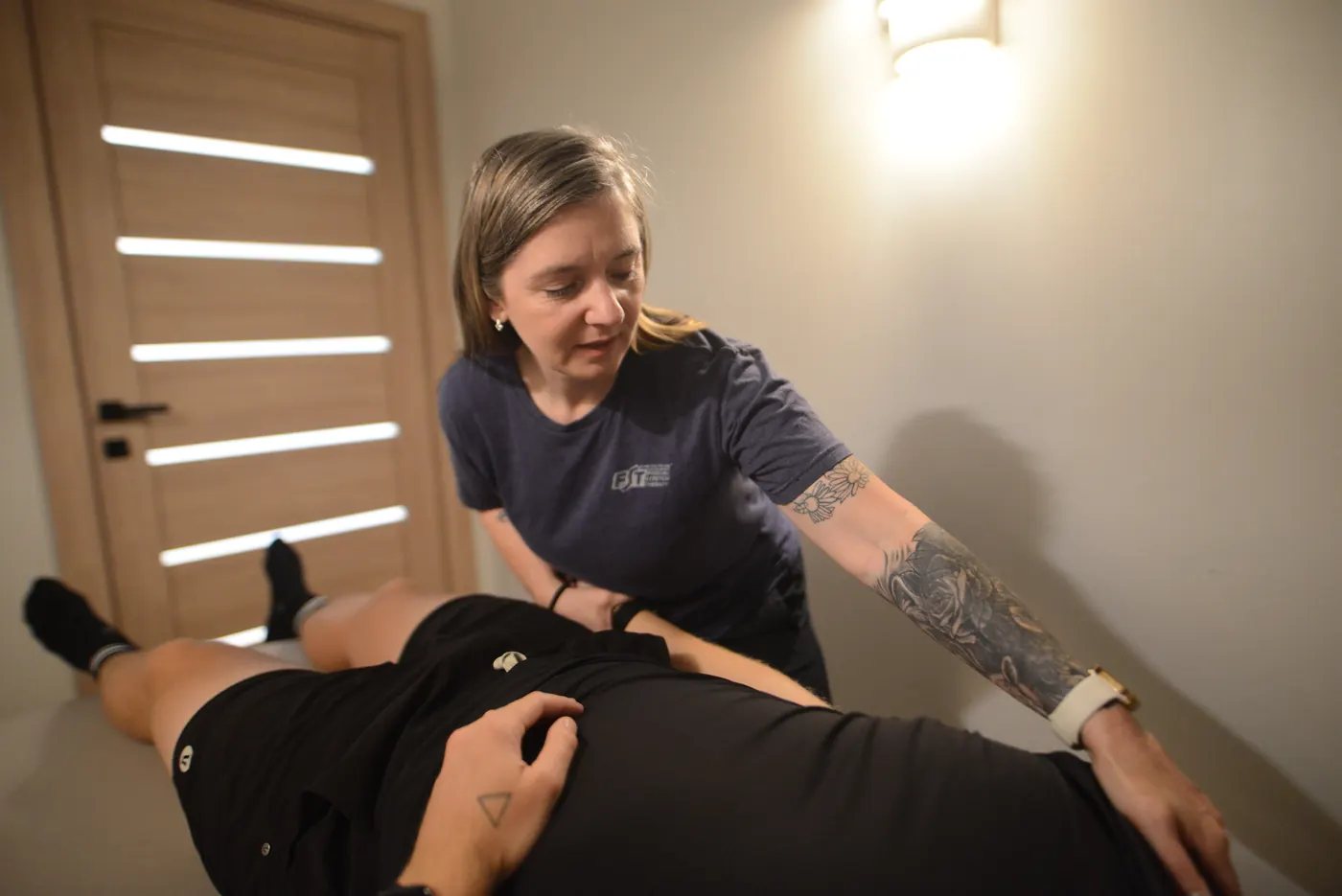
Active Release and soft tissue therapy are hands-on approaches used to address muscle, tendon, fascia, and movement-related restrictions that may contribute to recurring tightness, stiffness, or pain.
The focus is not general relaxation. At 100% Chiropractic Austin Rosedale, soft tissue work is connected to movement, mobility, exam findings, and the broader care plan.
The provider evaluates the area, identifies restricted or guarded tissue, and applies targeted soft tissue care when it fits the findings.
The goal is not simply to relax the tight area. The work is tied to posture, mobility, joint motion, and recurring movement patterns.
Soft tissue restrictions and joint restrictions often influence each other, so care may address both when clinically appropriate.
Treatment is connected to movement, posture, or corrective-care recommendations so progress is not limited to the table.
Common signs
Why temporary relief often does not last
Soft tissue relief can be useful, but recurring tightness often needs more context. If the underlying pattern remains, the same area may tighten again after work, workouts, travel, or daily life.
In our clinic, soft tissue care starts with evaluation. We look at posture, mobility, joint motion, muscle guarding, fascia restrictions, and daily stress patterns so care is tied to a broader movement plan.
This is part of our corrective-care-oriented approach for recurring pain patterns.
 Often focuses on relaxing the area that feels tight.
 May help you feel better temporarily.
 Can be useful, but tension may return if the underlying movement pattern remains.
 Evaluates posture, mobility, joint motion, muscle guarding, and daily stress patterns.
 Uses soft tissue work as part of a broader care plan.
 Helps patients understand why tightness keeps returning.
What patients often notice
Many people try stretching, massage, foam rolling, rest, or workout changes before they seek an evaluation. They usually come in after the same restriction keeps shaping work, workouts, sleep, or Austin activity.
How we decide what fits
Our evaluation looks at the full pattern: symptom history, mobility, posture, orthopedic findings, joint motion, muscle guarding, fascia restrictions, movement habits, and whether additional care options are appropriate.
Soft tissue therapy may be included when it fits the findings and goals of care. It may also be paired with chiropractic care, fascia stretch therapy, Class IV laser therapy, or corrective movement support when clinically appropriate.
Our integrated approach
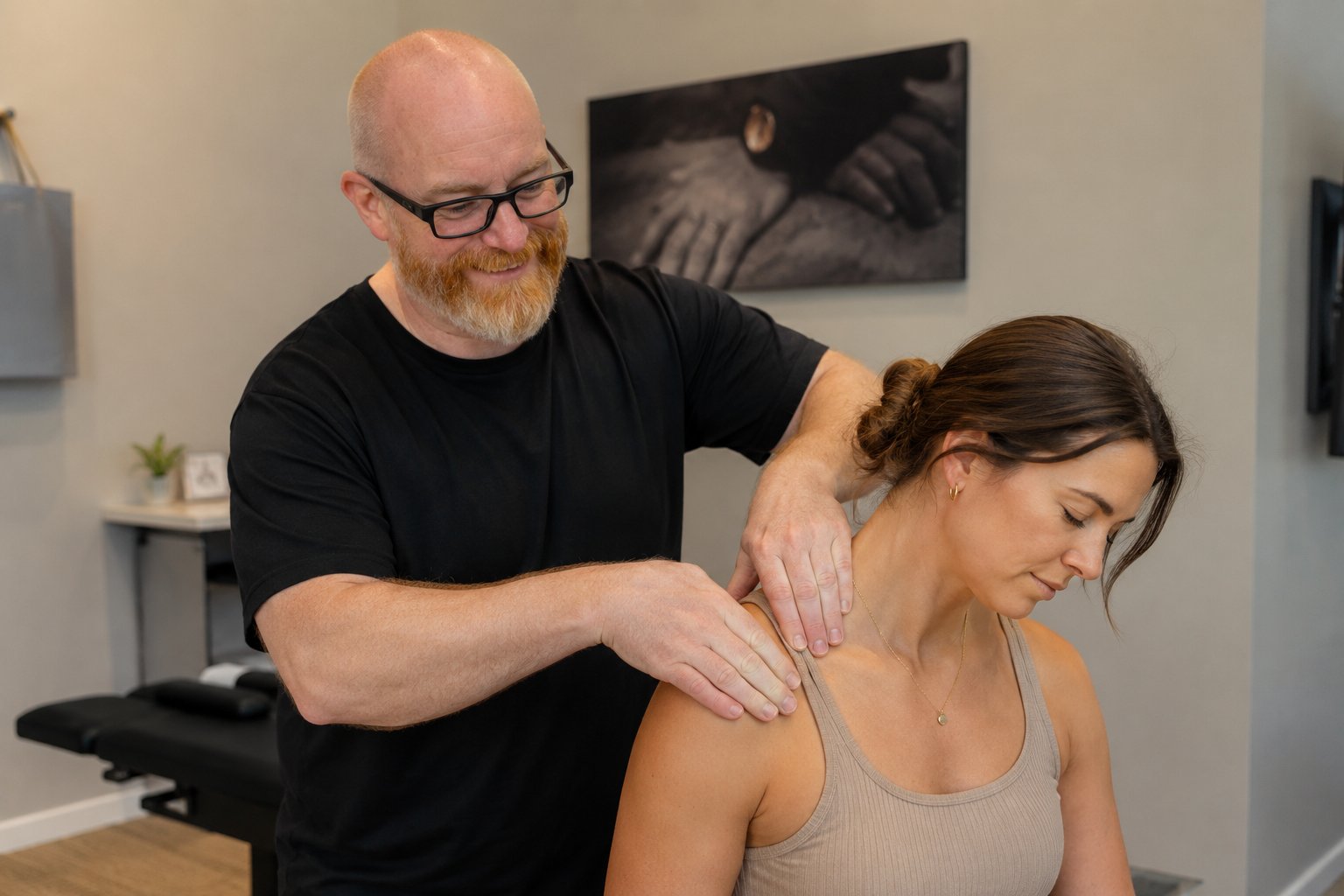
Soft tissue work is most effective when it is connected to the bigger picture. Our clinic combines evaluation, chiropractic care, soft tissue therapy, stretching, laser, and movement support under one roof.
After your evaluation, care may include one or more services when clinically appropriate for your findings and goals.
Helps address muscle, tendon, fascia, and movement-related soft tissue restrictions.
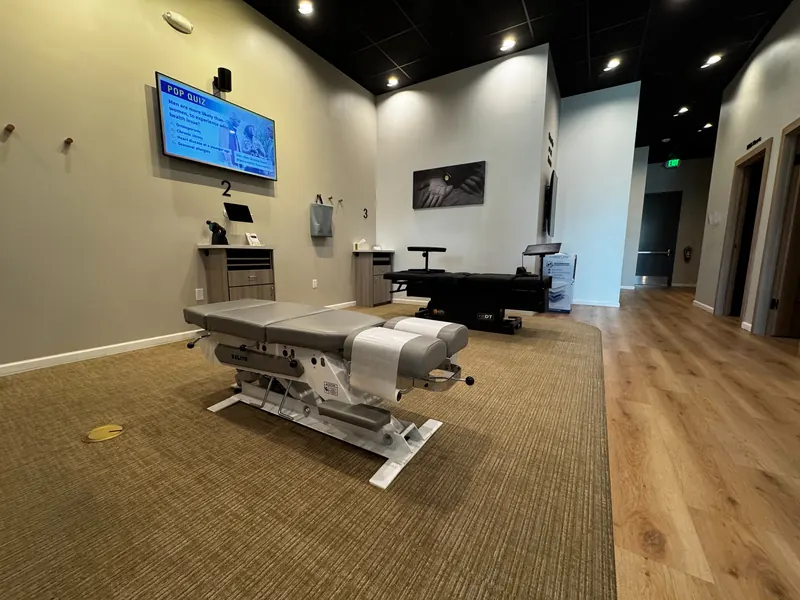
Supports joint motion and spinal mechanics so soft tissue changes are not fighting restricted movement.
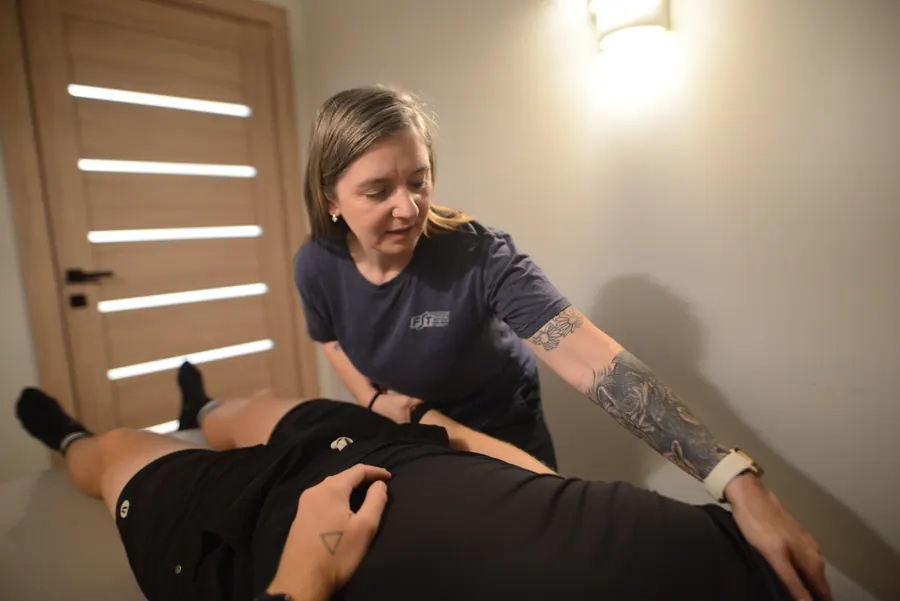
Helps improve flexibility, mobility, and connective tissue restrictions through assisted stretching.
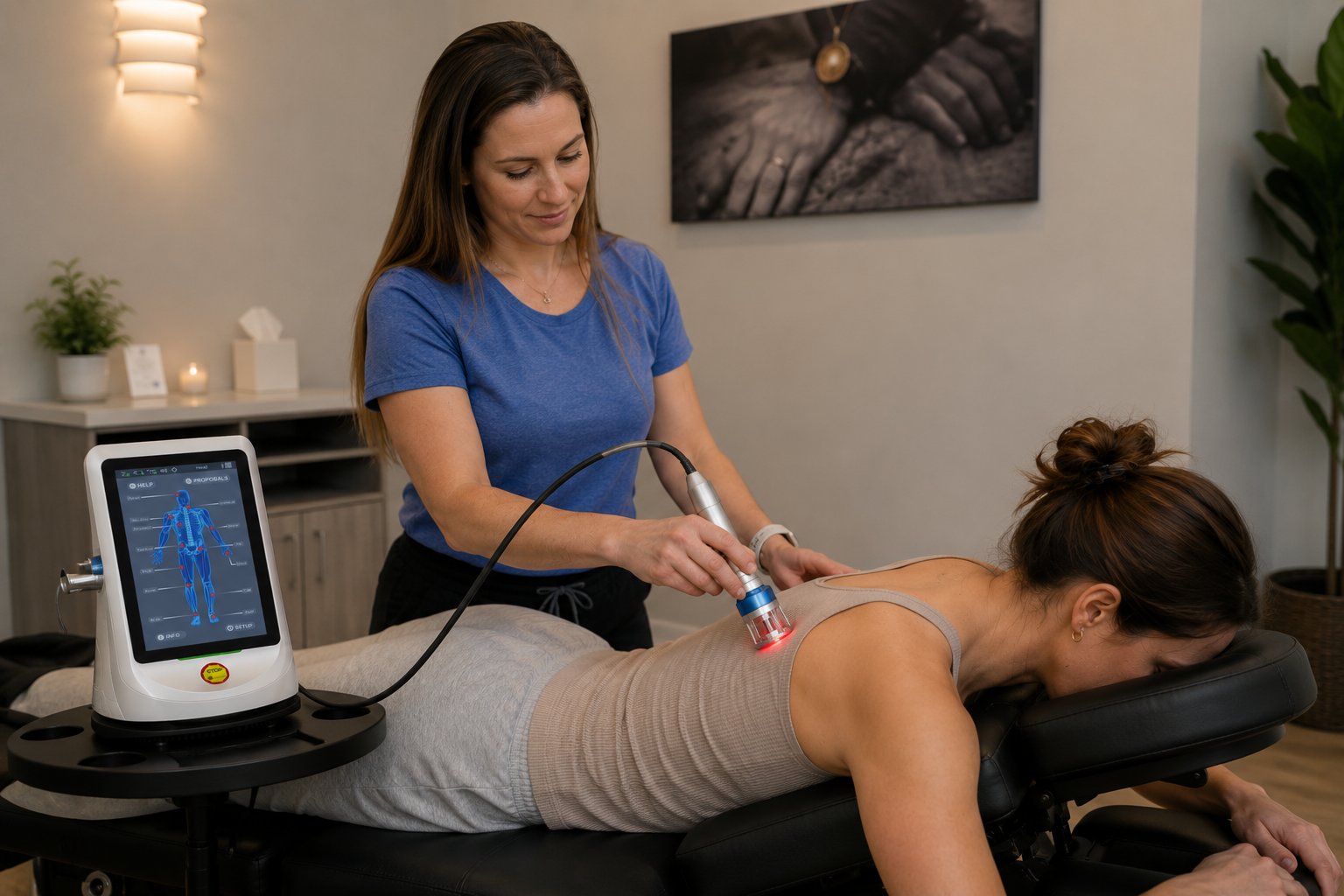
May support irritated soft tissue and inflammation-related discomfort when clinically appropriate.
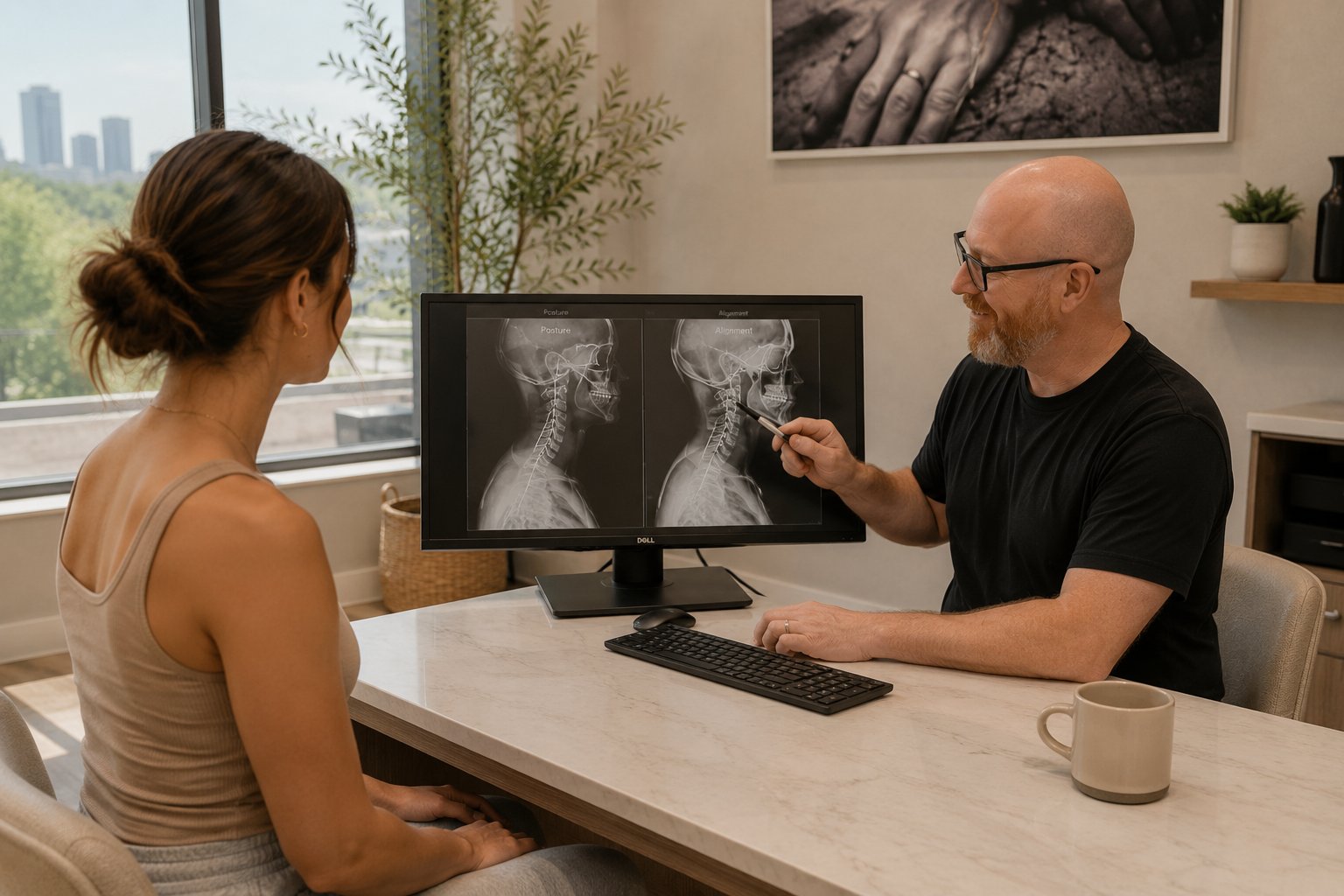
Helps patients build better movement habits outside the clinic.
Why choose this clinic
Soft tissue work is most effective when it is connected to the bigger picture. Our clinic combines evaluation, chiropractic care, soft tissue therapy, stretching, laser, and movement support under one roof.
Many patients come to us after trying temporary relief strategies that never fully addressed the recurring pattern.
We look at posture, mobility, joint motion, muscle guarding, fascia restriction, and symptom history before recommending care.
Soft tissue therapy can be coordinated with chiropractic care, stretch therapy, laser, decompression, or movement support when appropriate.
Care is focused on movement-related restrictions rather than generic spa-style massage.
Patients work with a clinic director experienced in evaluating recurring stiffness, pain, and movement-related patterns.
Patients leave understanding what may be contributing to their symptoms and what options may make sense.
Patient stories
Hear from Austin patients who came in with recurring pain, stiffness, mobility issues, or movement limitations. These stories are general proof and are not presented as soft-tissue-specific outcomes.
Reviews from patients across Google, Zocdoc, and other platforms.
How daily posture, work habits, and movement limitations can become a recurring pattern.
How recurring symptoms can affect work, focus, movement, and daily comfort.
A focused evaluation can help identify whether posture, mobility, muscle guarding, soft tissue restriction, or movement habits may be contributing to the pattern.
Active Release Technique is a soft tissue approach that focuses on muscles, tendons, fascia, and movement-related restrictions. At 100% Chiropractic Austin Rosedale, Active Release-style soft tissue work is used as part of an evaluation-informed care plan when it fits the patient's findings.
Massage often focuses on relaxation and general muscle relief. Soft tissue therapy in our clinic is tied to an exam and care plan that may consider posture, mobility, joint motion, muscle guarding, fascia restrictions, and recurring stress patterns.
Soft tissue therapy may help address tissue tenderness, restricted movement, muscle guarding, fascia tension, and mobility limits for some patients. Recommendations depend on evaluation findings and may be combined with chiropractic care, fascia stretch therapy, laser therapy, or corrective movement support.
Tightness may return when the broader movement pattern has not changed. Joint motion, posture, repetitive stress, workouts, driving, sleep position, fascia restrictions, and muscle guarding can all contribute for some patients.
Sometimes soft tissue therapy may be a key part of care, but it is not always used by itself. The clinic may recommend chiropractic care, fascia stretch therapy, Class IV laser therapy, or movement support when clinically appropriate.
Recommendations are based on the evaluation. We look at symptom history, mobility, posture, orthopedic findings, joint motion, muscle guarding, soft tissue sensitivity, fascia restriction, and daily movement habits.
Soft tissue work can feel tender in restricted or guarded areas, but care should be communicated and adjusted to the patient. The goal is not to force through pain.
Soft tissue therapy may be appropriate for neck, back, hip, shoulder, or glute tension when the evaluation suggests soft tissue restriction, guarding, or mobility limitation is part of the pattern.
The first visit is designed to understand your symptoms, history, posture, mobility, movement patterns, and exam findings. When clinically indicated, digital X-rays or additional care options may be discussed before recommendations are made.
When to get checked
If tightness, stiffness, or recurring soft tissue tension keeps returning, a focused evaluation can help clarify what may be contributing to the pattern and whether soft tissue therapy makes sense as part of your care plan.
Local soft tissue therapy in Central Austin
100% Chiropractic Austin Rosedale is located at 3800 N Lamar Blvd, Ste 160, Austin, TX 78756. Patients visit us for recurring tightness, stiffness after sitting or driving, soft tissue tenderness, mobility limits, and movement restrictions that keep returning after temporary relief.
100% Chiropractic Austin Rosedale
3800 N Lamar Blvd, Ste 160
Austin, TX 78756
(512) 638-8544
Mon-Thu: 8am - 12pm; 1:30 - 5:30pm
Fri: 8am - 12pm
The clinic sits between Local Foods and Westlake Dermatology facing Lamar Blvd and in the same building as Kendra Scott's HQ. We validate parking in the clinic. For garage GPS, use 3809 Medical Pkwy.
Get DirectionsBased on Austin patient reviews
"The evaluation helped me understand why the same pain kept coming back."- Austin patient
"I wish I had gotten this checked sooner."- Local patient Read more reviews on Google

If tightness, stiffness, or movement restriction keeps coming back, the next step is a focused evaluation to understand what may be contributing to the pattern and whether soft tissue therapy may fit your care plan.
Our Central Austin clinic helps patients understand why symptoms may be recurring before recommending chiropractic care, soft tissue therapy, stretch therapy, laser, or integrated treatment options.
Last updated June 13, 2026
 Soft Tissue Therapy Evaluation
Book Evaluation
Soft Tissue Therapy Evaluation
Book Evaluation